Thu, September 24, 2026

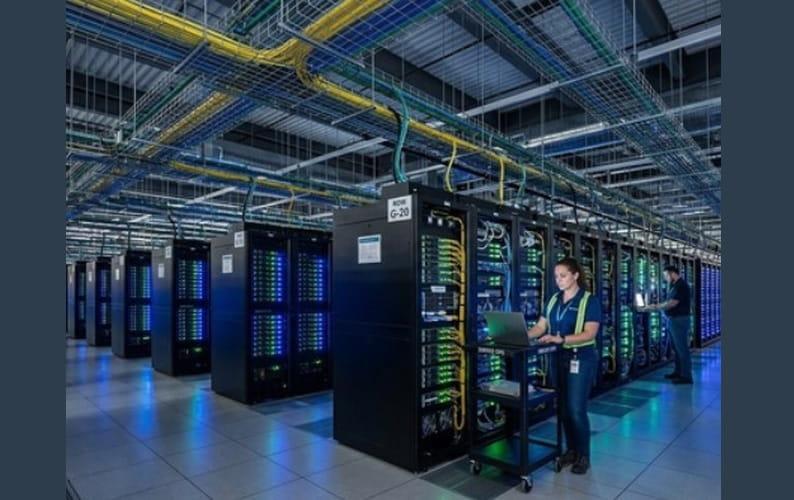
Photo: IANS
India’s Global Capability Centres (GCCs) are expected to play a much larger strategic role in global businesses by 2030, evolving from traditional capability and delivery hubs into transformation engines powered by artificial intelligence and agentic systems, according to a new report.
The report by Dell Technologies and Zinnov said the GCCs that emerge as leaders over the next few years will not necessarily be those running the largest number of AI pilots. Instead, the advantage will go to centres that build strong foundations in data, technology, infrastructure, governance and talent, enabling them to turn AI investments into measurable business outcomes.
About 70 per cent of GCC leaders already have a defined AI roadmap or charter. India is also home to approximately 28 per cent of the world’s GCC AI talent, with more than 1,200 centres having developed capabilities in artificial intelligence and machine learning.
“As they take on greater strategic ownership, robust foundations across data, infrastructure, and governance will become the bedrock of enterprise innovation. The GCCs that build these capabilities now will define how their organizations harness AI globally,” said Manish Gupta, President and Managing Director, Dell Technologies India.
India currently hosts more than 2,100 GCCs employing around 2.36 million people and generating $98.4 billion in revenue in FY26. Their role within multinational companies is also becoming more strategic, with nearly 64 per cent of GCC leaders holding dual global mandates, overseeing both their India centres and global functions.
Zinnov President Sidhant Rastogi said the focus of GCCs is shifting from scale and talent to ownership as AI becomes increasingly integrated into enterprise operations.
“For the last two decades, the conversation was largely about scale, talent, and capability. The next decade will be about ownership. As AI and agentic systems become embedded into enterprise workflows, GCCs will increasingly be expected to own products, platforms, markets, and measurable business outcomes,” Rastogi said.
The report suggests that this transition could fundamentally change how multinational companies use their India operations. GCCs that successfully build the necessary technological and organisational foundations could take responsibility not only for supporting global operations but also for developing products, managing platforms and contributing directly to revenue and other business outcomes.
That shift is already visible in the priorities of GCC leadership. Around 66 per cent of GCC leaders now rank top-line business impact as a high priority for their enterprise AI strategy, indicating that AI adoption is increasingly being measured in terms of growth and business value rather than simply cost savings or operational efficiency.
The rapid expansion of agentic AI also brings new infrastructure and cost considerations. According to the report, agentic workflows can consume anywhere between 10,000 and 5 lakh tokens per workflow, compared with around 1,000 to 2,000 tokens for a conventional chat interaction.
This means GCCs will increasingly need to make infrastructure decisions based on specific workloads and expected business outcomes. The report cautioned that failing to plan for these requirements early could turn AI deployment into a budget challenge rather than a source of measurable business value.
The transformation will also have a major impact on jobs and skills. With about 55 per cent of routine GCC work already exposed to AI-driven automation, and an estimated 60 per cent of the workforce expected to require reskilling by 2030, companies will need to rethink how work is organised.
The report argues that the coming phase will therefore involve more than simply teaching employees to use AI tools. GCCs will need to redesign roles, workflows and operating models around increasingly capable AI and agentic systems.
For India, this could mark a significant next stage in the evolution of GCCs — from centres primarily built around talent and service delivery to strategic units with greater ownership of global products, technology platforms and business outcomes.



© Copyright
Reporter Post.All Rights Reserved |
Powered by: Aptilogic Software |
 |
Page rendered in 0.0129 seconds.
|
Page rendered in 0.0129 seconds.