Thu, September 24, 2026
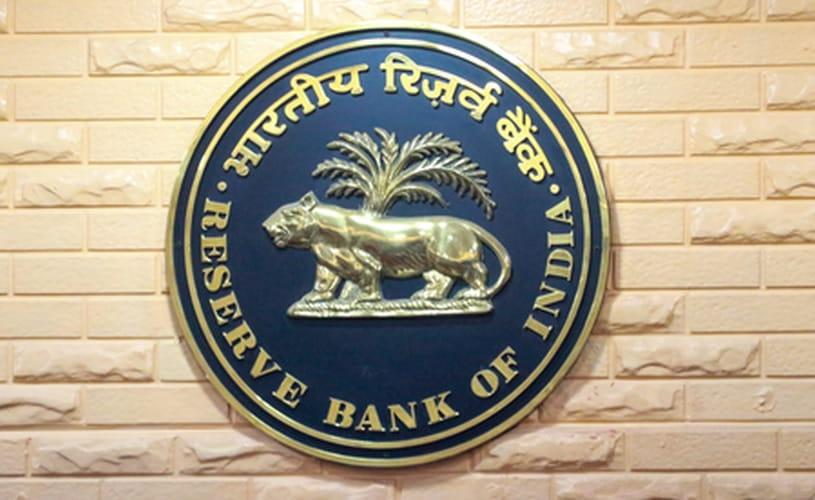
Photo: IANS
The Indian rupee has significant room to stabilise and potentially strengthen from its current levels, Reserve Bank of India (RBI) Deputy Governor Poonam Gupta said, pointing to improving external-sector fundamentals and the central bank’s ability to maintain orderly conditions in the foreign exchange market.
The rupee has depreciated cumulatively by 13.1 per cent on a point-to-point basis between March 31, 2025 and September 16, 2026. Gupta said the currency’s recent weakness may not fully reflect India’s underlying external-sector position.
“If anything, there seems to be a fair case for the rupee to not just stabilise but perhaps even appreciate from the current levels, as was being anticipated by the market analysts when the capital flow measures were first announced,” she said at the SBI conclave in Mumbai.
Gupta said India’s current account deficit (CAD) is expected to narrow over the coming years as traditional strengths such as services exports and remittances continue to support the external balance, while merchandise exports are showing signs of gaining strength.
“With the RBI remaining committed to ensuring orderly conditions in the foreign exchange market and having the wherewithal to meet decades worth of CAD, or the net balance of payment (BOP) deficit, the current market dynamics do not appear especially well-founded,” she said.
India has historically operated with a relatively modest current account deficit alongside a larger capital account surplus, resulting in a positive overall balance of payments. The CAD-to-GDP ratio has also declined over the longer term, strengthening the resilience of the external sector.
Gupta noted that India’s CAD remains well below levels generally regarded as a prudent threshold for emerging market economies. Net services exports and remittances continue to provide a strong cushion against the merchandise trade deficit, helping keep the CAD below 1 per cent of GDP.
However, recent increases in oil and gold prices have temporarily widened the current account deficit. At the same time, capital account surpluses have fallen short of the CAD in each of the past two years, resulting in a negative balance of payments of around $5 billion in 2024-25 and $23.6 billion in 2025-26.
Looking ahead, Gupta said India’s dependence on imported crude oil could gradually decline as the country expands alternative energy sources and continues efforts to develop domestic oil reserves. A reduction in oil consumption relative to the size of the economy could further ease pressure on the external balance.
She also pointed to the possibility of oil prices stabilising once geopolitical conflicts ease, while saying India’s broader trade basket is responding positively to emerging trade opportunities.
The positive impact of recently signed free trade agreements (FTAs), combined with an exchange rate that remains conducive to exports, could further support India’s merchandise trade performance, Gupta said.
Taken together, the RBI Deputy Governor’s assessment suggests that the outlook for the rupee will depend not only on short-term capital flows and commodity prices but also on the longer-term strength of India’s current account, export performance and energy dependence.



© Copyright
Reporter Post.All Rights Reserved |
Powered by: Aptilogic Software |
 |
Page rendered in 0.0129 seconds.
|
Page rendered in 0.0129 seconds.