Sat, April 25, 2026

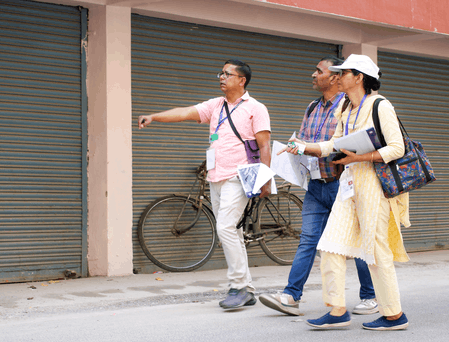
New Delhi — India is set to conduct its first fully digital population count with Census 2027, marking a major shift toward technology-driven governance and more precise policymaking.
According to an official fact sheet, the exercise will rely on mobile-based data collection, ensuring faster, more accurate, and comprehensive information. A key innovation is the Census Management & Monitoring System (CMMS), which will allow near real-time tracking of the enumeration process. Citizens will also have the option to self-enumerate, making participation more flexible and efficient.
In a significant policy move, the Cabinet Committee on Political Affairs has approved the inclusion of caste-based data collection in the upcoming census. Previously, only Scheduled Castes (SCs) and Scheduled Tribes (STs) were systematically enumerated.
With an approved budget of ?11,718.24 crore, the census will be supported by robust data security systems, including Critical Information Infrastructure-designated data centres. The nationwide exercise will be conducted in two phases to ensure thorough and structured data collection.
Census data plays a crucial role in assessing population trends and guiding planning across sectors such as food, water, energy, and infrastructure. By offering detailed, local-level insights, it enables better targeting of government schemes and more efficient allocation of resources.
As the eighth census since independence, Census 2027 is expected to significantly strengthen India’s statistical framework. With digital integration and enhanced security measures, it aims to deliver high-quality data that supports inclusive development and evidence-based decision-making in an evolving socio-economic landscape.
With inputs from IANS




| 14-09-2018 | ||||||
| Sl No. | Parameters | Actual Data(µg/m3) | Standard Limit(µg/m3) |
|---|---|---|---|
| 1 | PM 10 | 64 | 100 |
| 2 | PM 2.5 | 33 | 60 |
| 3 | SO2 | 55.3 | 80 |
| 4 | NO2 | 58.2 | 80 |
| 14-09-2018 | ||||||
| Station | Temperature(degree centigrade) | Rainfall(mm) | Relative humidity(%) | |||
|---|---|---|---|---|---|---|
| Max | Min | Past 24 hrs. | Since 1st March, 2018 | Max | Min | |
| Ranchi | 31.0 | 22.5 | 000.0 | 1010.1 | 95 | 66 |
| Jamshedpur | 34.1 | 26.2 | 000.0 | 1252.8 | 87 | 58 |
| Bokaro | 33.5 | 24.6 | 015.2 | 824.0 | 92 | 79 |
| Daltonganj | 32.6 | 24.9 | 004.2 | 960.9 | 95 | 67 |
© Copyright
Reporter Post.All Rights Reserved |
Powered by: Aptilogic Software |
 |
Page rendered in 0.115 seconds.
|
Page rendered in 0.115 seconds.