Thu, April 23, 2026

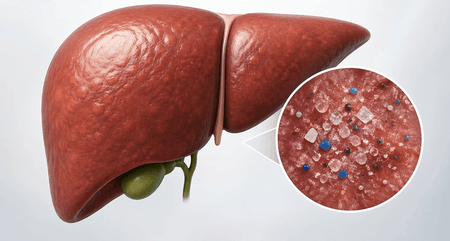
New Delhi — Exposure to microplastics and nanoplastics could play a role in the development of serious liver conditions, according to researchers, who say these particles may trigger biological changes similar to advanced liver disease in humans.
Published in the journal Nature Reviews Gastroenterology & Hepatology, the study highlights how these tiny plastic particles can induce oxidative stress, inflammation, and fibrogenesis in animal models — all key features associated with liver damage.
Scientists point out that the liver, which acts as the body’s primary detox organ, is particularly vulnerable. As it filters everything we consume, it may also become a pathway for harmful substances carried by plastics, including microbial pathogens, antibiotic-resistant elements, hormone-disrupting chemicals, and even cancer-linked additives.
Lead author Shilpa Chokshi, Professor of Experimental Hepatology and Director of the Centre of Environmental Hepatology, noted that liver disease is increasing rapidly worldwide and now accounts for roughly one in 25 deaths.
While obesity and alcohol consumption remain major contributors, she said they do not fully explain the sharp rise in cases. This has prompted researchers to explore environmental factors like plastic exposure, which may worsen or accelerate existing liver conditions.
There is already substantial evidence showing that plastics can accumulate in animal livers and cause harm, raising concerns about similar effects in humans. Researchers also acknowledge that detecting and measuring plastic-related damage in human tissues remains technically challenging, with several knowledge gaps still to be addressed.
Chokshi added that growing evidence suggests plastics are present in human tissues and may be linked to various health issues. Given their widespread presence in food, water, and air, prolonged exposure could allow these particles to reach the liver and interact with ongoing disease processes.
Co-author Richard Thompson, a marine biology expert, emphasised that the findings add to mounting evidence that plastic pollution is not just an environmental issue but a significant global health concern.
Researchers say more detailed studies are urgently needed to fully understand the long-term impact of plastic exposure on liver health.
With inputs from IANS




| 14-09-2018 | ||||||
| Sl No. | Parameters | Actual Data(µg/m3) | Standard Limit(µg/m3) |
|---|---|---|---|
| 1 | PM 10 | 64 | 100 |
| 2 | PM 2.5 | 33 | 60 |
| 3 | SO2 | 55.3 | 80 |
| 4 | NO2 | 58.2 | 80 |
| 14-09-2018 | ||||||
| Station | Temperature(degree centigrade) | Rainfall(mm) | Relative humidity(%) | |||
|---|---|---|---|---|---|---|
| Max | Min | Past 24 hrs. | Since 1st March, 2018 | Max | Min | |
| Ranchi | 31.0 | 22.5 | 000.0 | 1010.1 | 95 | 66 |
| Jamshedpur | 34.1 | 26.2 | 000.0 | 1252.8 | 87 | 58 |
| Bokaro | 33.5 | 24.6 | 015.2 | 824.0 | 92 | 79 |
| Daltonganj | 32.6 | 24.9 | 004.2 | 960.9 | 95 | 67 |
© Copyright
Reporter Post.All Rights Reserved |
Powered by: Aptilogic Software |
 |
Page rendered in 0.0955 seconds.
|
Page rendered in 0.0955 seconds.