Fri, October 16, 2026

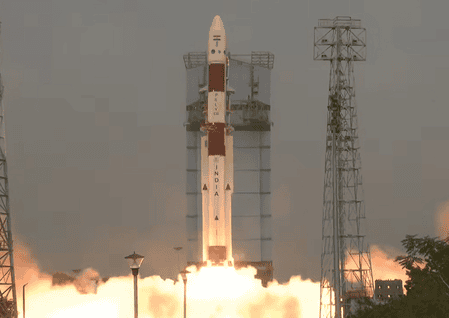
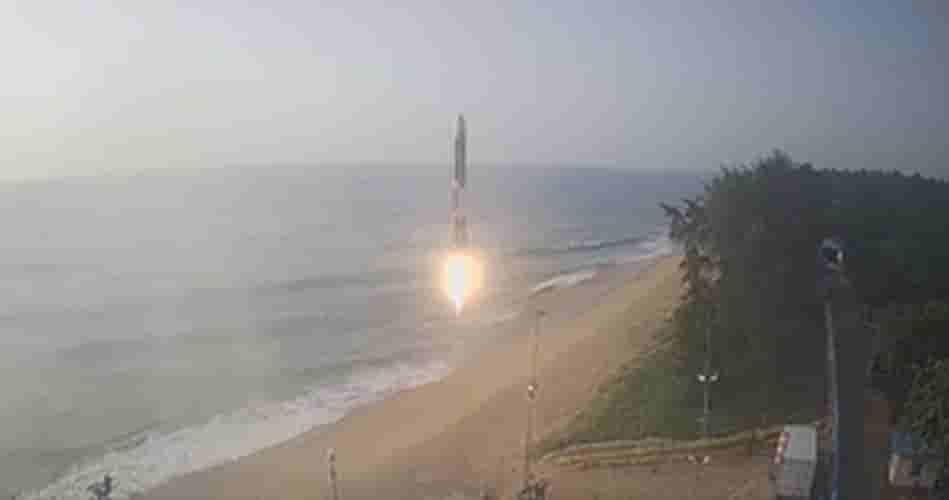
New Delhi- The PSLV-C62 mission, launched earlier on Sunday, encountered an anomaly during the separation phase of its third stage, ISRO Chairman V. Narayanan said, adding that a detailed investigation is currently underway.
The Polar Satellite Launch Vehicle (PSLV), which was tasked with placing the EOS-N1 Earth observation satellite along with 15 co-passenger satellites into a sun-synchronous orbit, lifted off at 10:17 am IST from the First Launch Pad at the Satish Dhawan Space Centre in Sriharikota.
Addressing the media after the launch, Narayanan said a deviation was detected near the end of the third stage, preventing the mission from progressing as planned. He noted that the vehicle’s performance remained nominal up to that point.
“We attempted the PSLV-C62 EOS-N1 mission. PSLV is a four-stage launch vehicle — the first stage is solid with two strap-on motors, the second stage is liquid, the third stage is solid, and the fourth stage is liquid. The vehicle performed as expected up to the third stage,” Narayanan said.
“However, towards the end of the third stage, we observed a disturbance that led to a deviation in the flight path. As a result, the mission could not be completed as intended. We are currently analysing data from all ground stations, and further details will be shared once the analysis is complete,” he added.
The issue follows a similar technical anomaly encountered during the PSLV-C61 mission in May 2025, which also experienced a problem in the third stage and failed to achieve its targeted orbit.
The PSLV-C62 mission was intended to deploy the 1,696-kg EOS-09 Earth Observation Satellite into a 505-km Sun-Synchronous Polar Orbit. It also marked the first launch of 2026 and the 64th flight of the PSLV.
EOS-N1, also known as Anwesha, was designed to strengthen India’s remote sensing capabilities, particularly in agriculture, urban planning, and environmental monitoring. The mission was also set to demonstrate the Kestrel Initial Technology Demonstrator (KID), a small re-entry vehicle prototype developed by a Spanish startup.
The launch represented the ninth dedicated commercial mission carried out by NewSpace India Limited (NSIL), ISRO’s commercial arm, and was the fifth flight using the PSLV-DL variant with two solid strap-on motors.
To date, PSLV has completed 63 successful missions, including landmark launches such as Chandrayaan-1, the Mars Orbiter Mission, Aditya-L1, and Astrosat. In 2017, it set a global record by deploying 104 satellites in a single mission.
With inputs from IANS




© Copyright
Reporter Post.All Rights Reserved |
Powered by: Aptilogic Software |
 |
Page rendered in 0.0149 seconds.
|
Page rendered in 0.0149 seconds.