Mon, May 25, 2026

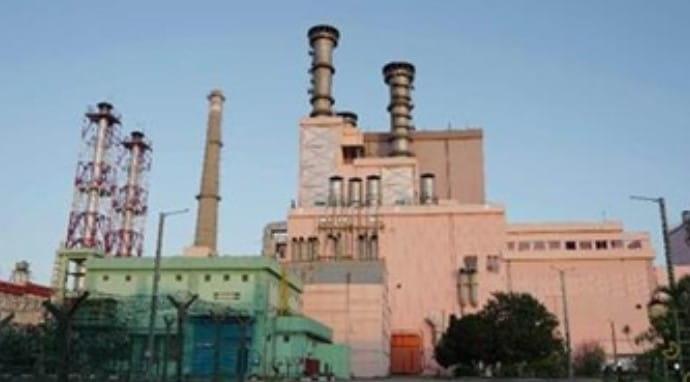
New Delhi- India has taken a major step toward long-term energy self-sufficiency after the indigenously developed 500 MW Prototype Fast Breeder Reactor (PFBR) at Kalpakkam in Tamil Nadu achieved criticality — the stage at which a nuclear reactor begins a controlled and self-sustaining chain reaction for the first time.
According to a report, the achievement places India among a select group of nations possessing advanced fast breeder reactor technology, with Russia currently being the only other country operating commercial fast breeder reactors.
The milestone is being seen as a major boost to India’s three-stage nuclear power programme envisioned by renowned nuclear scientist Homi Jehangir Bhabha, widely regarded as the architect of India’s nuclear strategy.
The PFBR has been designed to produce more fuel than it consumes by using plutonium-based fuel and generating additional fissile material. This is expected to significantly strengthen India’s long-term energy security.
The reactor’s criticality also marks India’s transition into the second stage of its nuclear programme. In the first stage, natural uranium is used as fuel in nuclear reactors, producing plutonium as a by-product. The second stage involves using this plutonium in Fast Breeder Reactors (FBRs).
The Kalpakkam reactor is expected to play a crucial role in producing Uranium-233 from thorium, paving the way for the third stage of the programme, where India aims to use its vast thorium reserves for large-scale power generation.
India possesses some of the world’s largest thorium reserves, while its uranium resources remain comparatively limited. The report noted that thorium-based nuclear energy could potentially meet the country’s electricity needs for several hundred years.
The development is also expected to support India’s clean energy transition and its commitment to achieving net-zero carbon emissions by 2070 under the leadership of Narendra Modi.
At present, India’s nuclear power generation capacity stands at 8.78 GW, contributing nearly 3 per cent of the country’s total electricity output.
According to the report, with indigenous 700 MW reactors and upcoming international collaborations involving 1,000 MW reactors, India’s installed nuclear power capacity is projected to rise to 22.38 GW by 2031-32.
With inputs from IANS




| 14-09-2018 | ||||||
| Sl No. | Parameters | Actual Data(µg/m3) | Standard Limit(µg/m3) |
|---|---|---|---|
| 1 | PM 10 | 64 | 100 |
| 2 | PM 2.5 | 33 | 60 |
| 3 | SO2 | 55.3 | 80 |
| 4 | NO2 | 58.2 | 80 |
| 14-09-2018 | ||||||
| Station | Temperature(degree centigrade) | Rainfall(mm) | Relative humidity(%) | |||
|---|---|---|---|---|---|---|
| Max | Min | Past 24 hrs. | Since 1st March, 2018 | Max | Min | |
| Ranchi | 31.0 | 22.5 | 000.0 | 1010.1 | 95 | 66 |
| Jamshedpur | 34.1 | 26.2 | 000.0 | 1252.8 | 87 | 58 |
| Bokaro | 33.5 | 24.6 | 015.2 | 824.0 | 92 | 79 |
| Daltonganj | 32.6 | 24.9 | 004.2 | 960.9 | 95 | 67 |
© Copyright
Reporter Post.All Rights Reserved |
Powered by: Aptilogic Software |
 |
Page rendered in 0.1023 seconds.
|
Page rendered in 0.1023 seconds.