Wed, October 14, 2026

New Delhi — Billionaire entrepreneur Elon Musk has said that his brain–computer interface company, Neuralink, has the potential to restore full body functionality in humans, particularly those with spinal cord injuries.
According to Musk, the breakthrough centres on the motor cortex and could enable people with severed spinal cords to regain complete bodily movement. Sharing his views on social media platform X, the Tesla and SpaceX chief expressed strong confidence in the technology’s capabilities.
“I am confident at this point that restoring full body functionality is possible with Neuralink,” Musk wrote.
In a video post, he explained that the technology works by bypassing damaged nerves in the neck or spine. “Neuralink can effectively bridge communication from the brain’s cortex to areas beyond where the nerves are damaged. From a physics standpoint, restoring full body functionality is possible,” he said.
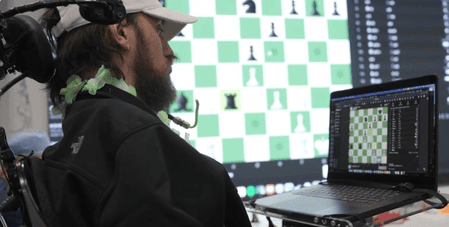
Musk first announced Neuralink’s motor cortex-focused technology in 2022, the same year human trials were initiated. The Neuralink device involves implanting a small chip that replaces a portion of the skull and connects to the brain using ultra-thin, thread-like electrodes. According to the company’s website, the N1 implant contains 1,024 electrodes arranged across 64 flexible threads.
In September last year, Neuralink revealed that its device had been implanted in 12 patients as part of ongoing clinical trials.
Separately, on January 1, the California-based neurotechnology firm announced significant progress in its efforts to restore vision. Neuralink’s visual implant, known as Blindsight, is designed to help visually impaired individuals, including those who are blind from birth.
The Blindsight device received the “breakthrough device” designation from the US Food and Drug Administration (FDA) in September 2024, a move expected to accelerate its development and approval process. The company plans to begin large-scale production of the device this year.
Musk also said that Neuralink aims to transition to high-volume production of brain–computer interface devices by 2026, alongside the introduction of a largely automated surgical procedure. “The device threads will pass through the dura without the need to remove it. This is a major advancement,” he noted on X.
According to Musk, Blindsight could allow people who have lost both eyes to regain vision. He further claimed that as long as the visual cortex remains intact, the device may restore sight even in individuals who have been blind since birth.
With inputs from IANS



© Copyright
Reporter Post.All Rights Reserved |
Powered by: Aptilogic Software |
 |
Page rendered in 0.0133 seconds.
|
Page rendered in 0.0133 seconds.