
Fri, September 25, 2026

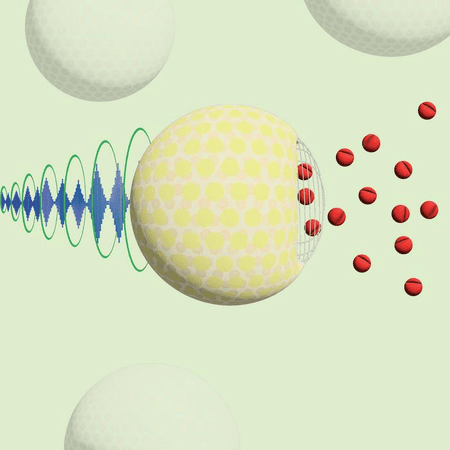
New Delhi – Scientists in the US are developing a non-invasive drug delivery system that uses ultrasound to release medicines precisely where they are needed in the body, reducing side effects.
The approach, created by researchers at Stanford University, involves packing drugs into nanoparticles that remain inactive until triggered by ultrasound at the target site.
In a study published in Nature Nanotechnology, the team demonstrated in rats that the system could deliver ketamine to specific regions of the brain and painkillers to targeted nerves in the limbs. By using a sucrose-based formulation, they found the nanoparticles were safer, more stable, and easier to manufacture.
“Turns out just a little bit of sugar is all you need to make this work,” said Raag Airan, Assistant Professor of Radiology at Stanford Medicine.
The team discovered that filling the nanoparticles with a 5% sucrose solution made them stable enough to circulate in the bloodstream, yet sensitive to ultrasound. This meant drugs could travel through the body but only be released at the exact location exposed to a focused ultrasound beam.
Initially, the researchers experimented with chemical compounds and additives but found that sugar worked best. After testing various types and concentrations, they confirmed that 5% sucrose provided the optimal balance of stability and ultrasound responsiveness at body temperature.
When tested in rats, the system delivered about three times more ketamine to a targeted brain region compared to other areas, proving its ability to achieve precise drug release.
If the method is successful in humans, doctors may be able to fine-tune treatments such as using ketamine for depression while avoiding its unwanted dissociative side effects.
“This approach lets us maximize the therapeutic benefit while minimizing off-target effects,” Airan said.
With inputs from IANS



© Copyright
Reporter Post.All Rights Reserved |
Powered by: Aptilogic Software |
 |
Page rendered in 0.0132 seconds.
|
Page rendered in 0.0132 seconds.