Thu, September 24, 2026

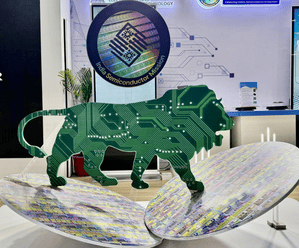
New Delhi — India’s semiconductor ambitions are gaining momentum, with policymakers and industry leaders choosing to prioritize mature-node chip manufacturing instead of chasing the most advanced technologies.
The country is focusing on building capacity in the 28nm to 65nm range — chips widely used in sectors such as automotive, telecom, and industrial electronics.
A new analysis by Bastion Research describes the strategy as a smart, pragmatic move that allows India to plug a crucial gap in the global supply chain. While industry giants like TSMC and Samsung dominate the cutting-edge 5nm and 3nm segments, India is carving out a role in producing mature nodes, which remain vital to high-demand industries.
The report likened India’s current stage to Taiwan and South Korea’s semiconductor journeys between the 1970s and 1990s, underscoring the potential for steady, long-term growth.
India is also rapidly expanding its role in system integration across the semiconductor value chain. With a deep talent pool and an expanding ecosystem, the country is strengthening its expertise in integrating semiconductor components into advanced systems for automotive, consumer electronics, telecom, and medical technology. According to the analysis, India already delivers world-class integration services and is scaling up operations to meet global demand.
Global market dynamics are also playing to India’s advantage. As companies adopt a “China +1” strategy to diversify supply chains, India is emerging as a reliable and cost-effective partner.
To accelerate this growth, the government launched the ?76,000-crore Semicon India Programme in 2021, offering incentives to attract global chipmakers, build fabs and packaging units, and strengthen the local supply chain. For now, the emphasis remains on mature-node fabs rather than bleeding-edge technologies.
Progress is visible on the ground. Earlier this month, the government approved four new semiconductor projects worth ?4,600 crore in Odisha, Andhra Pradesh, and Punjab. With these, the India Semiconductor Mission now oversees 10 projects across six states, totaling ?1.6 lakh crore in investments.
In his Independence Day address, Prime Minister Narendra Modi reiterated the government’s commitment, declaring that made-in-India semiconductor chips would hit the market by year-end. So far, six semiconductor plants have already been approved, marking a major step forward.
Industry experts believe that while India is not yet competing in the advanced chipmaking space, its focus on mature nodes and system integration is firmly establishing it as a key player in the global supply chain — ready to serve industries that rely on essential, high-volume chips.
With inputs from IANS



© Copyright
Reporter Post.All Rights Reserved |
Powered by: Aptilogic Software |
 |
Page rendered in 0.0139 seconds.
|
Page rendered in 0.0139 seconds.