Fri, September 25, 2026

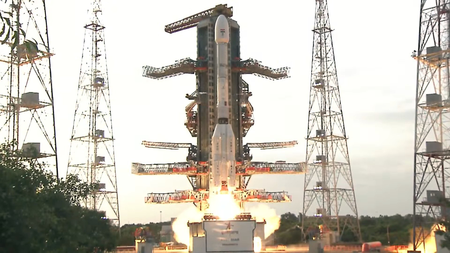
New Delhi – India is rapidly moving towards becoming a space superpower, with the country’s space industry having expanded several times over in the past five years, experts said on Friday, applauding Prime Minister Narendra Modi’s Independence Day remarks on the sector.
Addressing the nation from the Red Fort, PM Modi hailed India’s achievements in space and reaffirmed the goal of making the country self-reliant in this domain.
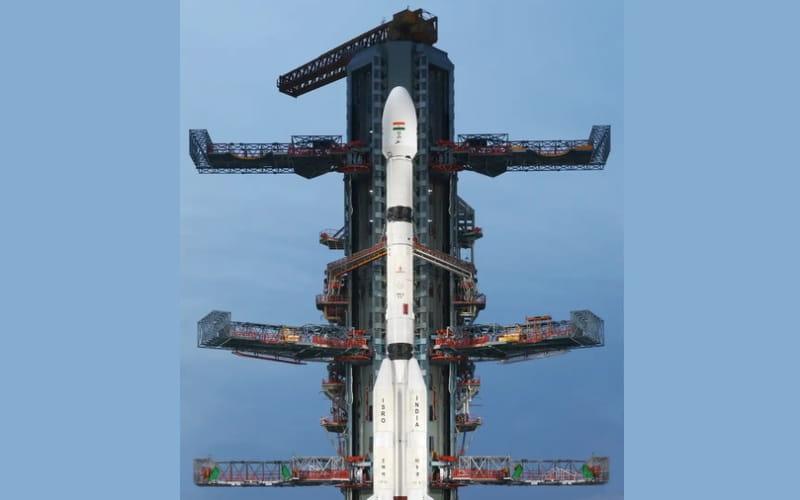
Referring to milestone missions like Gaganyaan, Chandrayaan, and Mangalyaan, space scientist Dr. P.K. Ghosh told IANS, “We are very close to becoming a space superpower with all these projects in the pipeline.”
He praised the Prime Minister for recognising the sector’s achievements, noting that India has developed critical technologies independently, including the cryogenic engine, and is making steady progress toward its flagship human spaceflight programme, Gaganyaan.
Ghosh highlighted that these feats have been accomplished on a modest budget, yet have delivered significant results, attracting international collaboration. He cited recent joint efforts like the NISAR mission with NASA, as well as planned projects with Japan’s JAXA and other countries.
The Prime Minister also announced plans for the Bharatiya Antariksh Station (BAS), India’s own space station, expected to be operational after 2030. “It will be a major milestone. Every Indian should take pride in it. Currently, the only operational stations are the International Space Station and China’s Tiangong,” Ghosh said.
He added that the sector’s growth has inspired India’s youth, with the country now home to around 300 space startups.
Lt. Gen. A.K. Bhatt (Retd.), Director General of the Indian Space Association (ISpA), credited the government’s 2020 decision to open the space sector to private players for this surge.
“Our Prime Minister’s vision to liberalise the space sector has been transformative. Supported by progressive reforms like the Space Policy, increased FDI opportunities, and strong government backing, the industry has grown exponentially in just five years,” Bhatt said.
He added, “The rapid rise of space startups reflects unprecedented innovation and ambition. With this momentum, we can achieve the target of a $44 billion space economy by 2033 and secure India’s place among the world’s leading spacefaring nations. This is not just economic growth—it’s a national movement inspiring every Indian to aim higher and reach for the stars.”
With inputs from IANS



© Copyright
Reporter Post.All Rights Reserved |
Powered by: Aptilogic Software |
 |
Page rendered in 0.0143 seconds.
|
Page rendered in 0.0143 seconds.