Thu, September 03, 2026
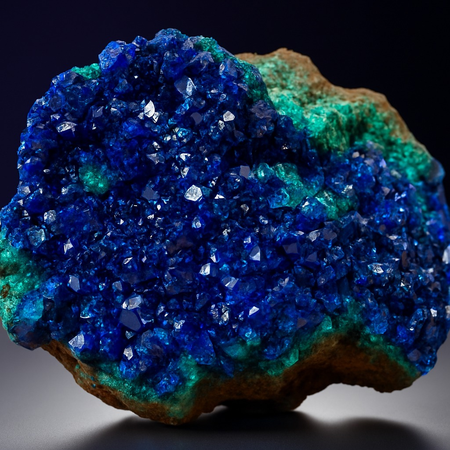
New Delhi – India holds around 8.52 million tonnes of rare earth element reserves, Minister of State Dr. Jitendra Singh informed Parliament on Wednesday.
Out of this, 7.23 million tonnes of Rare Earth Oxide (REO) are contained within 13.15 million tonnes of monazite—a mineral rich in thorium and rare earths—found in coastal beaches, red and teri sands, and inland alluvium in states including Andhra Pradesh, Odisha, Tamil Nadu, Kerala, West Bengal, Jharkhand, Gujarat, and Maharashtra. An additional 1.29 million tonnes of rare earths are found in hard rock formations in parts of Gujarat and Rajasthan, he said in a written reply in the Lok Sabha.
The Atomic Minerals Directorate for Exploration and Research (AMD), under the Department of Atomic Energy, is actively involved in exploring and expanding rare earth resources in placer sands and hard rock terrains across potential geological zones in the country.
Furthermore, the Geological Survey of India (GSI) has added 482.6 million tonnes of rare earth ore resources through 34 exploration projects at various cut-off grades.
Dr. Singh noted that India has exported only 18 tonnes of rare earth minerals over the past decade, with no imports recorded during the same period.
On the global front, the Ministry of External Affairs is engaging with international partners to address the impact of export restrictions on rare earth magnets imposed by certain countries. These discussions aim to enhance cooperation in nuclear energy and rare earth technologies, ensuring a stable and secure supply chain for Indian stakeholders.
To strengthen resilience in the supply of critical minerals—including rare earths, essential for electric vehicles, renewable energy, and defence—the Ministry of Mines has established bilateral ties with countries rich in mineral resources, such as Australia, Argentina, Zambia, Peru, Zimbabwe, Mozambique, Malawi, and Côte d'Ivoire, as well as with global institutions like the International Energy Agency (IEA).
India is also participating in multilateral platforms like the Minerals Security Partnership (MSP), Indo-Pacific Economic Framework (IPEF), and the Initiative on Critical and Emerging Technologies (iCET) to build a robust value chain for critical minerals.
The Ministry has also created Khanij Bidesh India Limited (KABIL), a joint venture aimed at acquiring strategic mineral assets abroad, particularly lithium, cobalt, and others. KABIL has signed an Exploration and Development Agreement with CAMYEN, a state-owned enterprise in Argentina, to explore five lithium blocks in the Catamarca province. It is also in active talks with Australia’s Critical Mineral Office for similar ventures.
Moreover, India is in the process of finalizing Government-to-Government (G2G) agreements with Brazil and the Dominican Republic to boost cooperation in the field of rare earth and critical minerals, focusing on research, development, and innovation in mining.
Dr. Singh emphasized that critical minerals like lithium, graphite, cobalt, titanium, and rare earth elements are increasingly vital for strategic industries and that the Ministry of Mines is pursuing policy reforms and international collaboration to ensure secure and resilient supply chains.
With inputs from IANS


© Copyright
Reporter Post.All Rights Reserved |
Powered by: Aptilogic Software |
 |
Page rendered in 0.0854 seconds.
|
Page rendered in 0.0854 seconds.