Tue, August 18, 2026

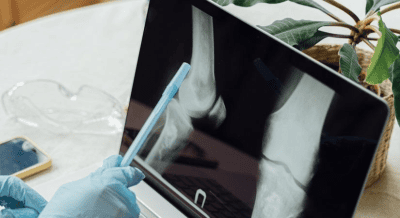
New Delhi- In a significant scientific advancement, researchers from IIT (BHU), Uttar Pradesh, have developed a miniaturized, self-reporting diagnostic device capable of detecting early-stage bone cancer with high accuracy.
The innovative sensor is the first of its kind and targets the detection of osteopontin (OPN), a crucial biomarker linked to bone cancer.
According to the research team, led by Dr. Pranjal Chandra from the School of Biochemical Engineering, the device is portable, cost-effective, and requires no reagents, making it ideal for rural healthcare environments.
The device operates similarly to a glucose meter, offering rapid, precise, and point-of-care diagnosis, even in areas with limited medical infrastructure.
It uses a specialized sensor surface made of gold and redox-active nanomaterials, enabling efficient detection with minimal effort.
“This technology makes cancer detection simpler and strengthens primary healthcare facilities,” said Prof. Pranjal Chandra. The team’s findings have been published in Nanoscale, a journal by the Royal Society of Chemistry (UK).
Osteopontin (OPN) is a key biomarker for osteosarcoma, an aggressive form of bone cancer that predominantly affects children and adolescents.
Existing methods for detecting OPN are expensive and time-consuming. In contrast, the new device offers fast, reliable results without the need for elaborate lab setups.
The reagent-free immunosensor design allows for affordable, on-the-spot testing, providing much-needed cancer detection solutions for rural and underserved regions.
Cancer remains a major public health challenge in India, with rising case numbers and high mortality rates.
Praising the innovation, IIT (BHU) Director Prof. Amit Patra described it as “an excellent example of technology with a human touch.” He emphasized that the development contributes to precision medicine and aligns with India’s national health goals. It also supports initiatives like Make in India and Start-up India.
The research team has filed for a patent and is now working to develop a smartphone-compatible version of the device to enhance remote healthcare accessibility.
With inputs from IANS



© Copyright
Reporter Post.All Rights Reserved |
Powered by: Aptilogic Software |
 |
Page rendered in 0.1084 seconds.
|
Page rendered in 0.1084 seconds.