Mon, August 24, 2026


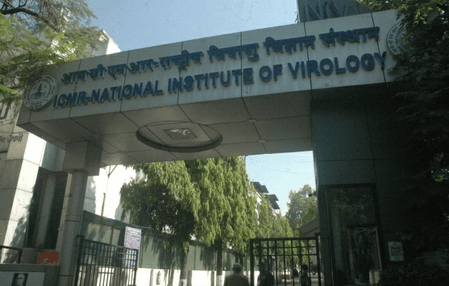
Pune: The latest COVID-19 subvariants—JN.1.16 (Omicron sub-lineage) and the XFG recombinant strain (LF.7 and LP.81.2)—have not led to a significant rise in severe infections, assured Dr. Naveen Kumar, Director of ICMR-National Institute of Virology (NIV), on Wednesday. This comes as India’s active COVID cases decline after a month-long surge.
Current Situation
Key Findings
Ongoing Surveillance
Since the pandemic began, ICMR-NIV has tracked COVID variants through its 73 Virus Research & Diagnostic Labs (VRDLs) nationwide.
Vaccine Preparedness
Two Omicron-specific vaccines are already available in India:
On whether updated vaccines are needed, Dr. Kumar clarified:
"This is a policy decision. NIV’s role is to monitor circulating strains—the Health Ministry is continuously assessing the situation."
Bottom Line
While infections persist, severity remains low. ICMR-NIV continues real-time tracking to guide public health responses.
With inputs from IANS




© Copyright
Reporter Post.All Rights Reserved |
Powered by: Aptilogic Software |
 |
Page rendered in 0.0779 seconds.
|
Page rendered in 0.0779 seconds.