
Mon, October 12, 2026

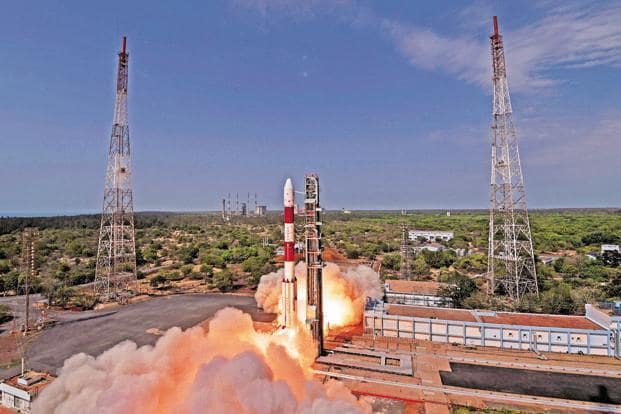
Representational Pic
The Indian Space Research Organisation (ISRO) plans to launch three more communication satellites to improve high-speed bandwidth connectivity in rural areas under the government's Digital India programme, ISRO Chairman K. Sivan said on Sunday.
Speaking to reporters after the successful launch of two British earth observation satellites aboard a Polar Satellite Launch Vehicle (PSLV), Sivan said the planned satellites would together provide international-level bandwidth speeds.
The satellites identified for the programme are GSAT-20, GSAT-11 and GSAT-29, while GSAT-19 has already been launched. The next satellite in the series is expected to be launched next year.
The initiative is aimed at strengthening India's communication infrastructure and expanding access to high-speed connectivity in rural and remote areas, supporting the broader objectives of Digital India.
Sivan also said ISRO had drawn up an ambitious launch schedule for the next six months, with a mission planned approximately every two weeks. Alongside communication satellites, the space agency will also launch earth observation satellites.
Providing an update on India's second lunar mission, Chandrayaan-2, Sivan said the launch window had been scheduled between January 3 and February 16, 2019, with January 3 being the target date.
“We do not expect any delay in the Chandrayaan-2 mission,” Sivan said.
Chandrayaan-2 is expected to significantly expand India's lunar exploration programme by carrying out detailed studies of the Moon's surface and composition.
Sivan also addressed preparations for India's human spaceflight programme. He said ISRO would serve as the certification agency for the rocket that will eventually carry Indian astronauts.
The certification norms will be formulated with assistance from the Directorate General of Civil Aviation (DGCA), while ISRO also intends to seek technical expertise from other countries for the certification process.
The announcements came after ISRO successfully placed British satellites NovaSAR and S1-4 into orbit using the PSLV in a commercial launch.
Both satellites belong to Surrey Satellite Technologies Ltd (SSTL), UK. The mission was carried out through Antrix Corporation Ltd, ISRO's commercial arm.
Antrix Chairman-cum-Managing Director S. Rakesh said the launch of the two British satellites generated revenue of more than Rs 220 crore for the company.
Looking ahead, Sivan said the next commercial PSLV mission would carry 30 small satellites belonging to third-party customers, along with an Indian satellite.
The planned series of launches highlights ISRO's expanding role not only in India's communication and space programmes but also in the international commercial satellite-launch market.



© Copyright
Reporter Post.All Rights Reserved |
Powered by: Aptilogic Software |
 |
Page rendered in 0.011 seconds.
|
Page rendered in 0.011 seconds.