Fri, October 23, 2026

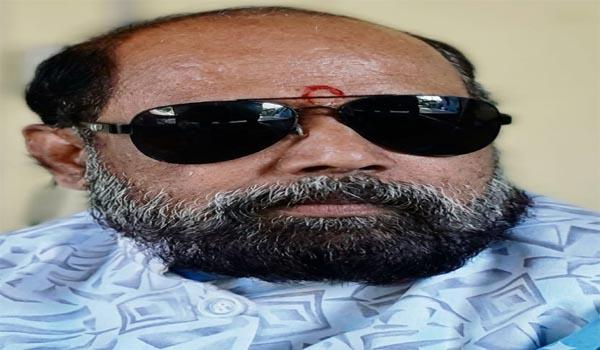
Author: Vijay Shankar Nayak, Senior Congress Leader, Jharkhand
Today, Indian politics is passing through a critical phase, where the fundamental questions of democracy, the Constitution, and social justice have once again come to the forefront. The people of the country are asking: who will protect the Constitution of India, and who will safeguard the rights of the poor, Dalits, Adivasis, and backward classes?
In these challenging times, one voice stands firmly before the nation—that voice is of Rahul Gandhi. He has consistently emphasized that India is not merely a political entity, but a constitutional republic founded on the principles of equality, justice, and fraternity. If the Constitution is weakened, it is the most vulnerable sections of society who will suffer first.
It is also being observed that some leaders and parties engaged in Dalit politics appear uneasy with this campaign led by Rahul Gandhi. However, the truth remains that the struggle to protect the Constitution and democracy is not the fight of any one individual or political party—it is a collective national responsibility.
Social Change and Dalit Politics
Over time, Dalit politics has evolved in multiple forms. Numerous movements have emerged, and various political parties have been formed, each advocating social justice in their own way. However, it is equally true that the social forces behind these movements have emerged from the same democratic framework that was strengthened by Congress governments.
Today, the country stands at a crucial juncture, where concerns are being raised about the strength and independence of democratic institutions. Several social organizations and intellectuals are questioning whether these institutions remain as robust as they once were. In this context, Rahul Gandhi has repeatedly asserted that the true strength of the nation lies in its Constitution.
Reservation and the Foundation of Social Justice
The provision of reservation for Scheduled Castes and Scheduled Tribes in the Indian Constitution was not merely a political decision, but a historic effort to correct centuries of systemic social injustice.
Those who have advanced in education, administration, and politics through reservation must recognize that this system is not the contribution of any single individual. Rather, it is the outcome of a broader social vision enshrined in the Constitution and implemented through the sustained efforts of Congress governments.
The Historic Role of the Congress
From the freedom movement to the present day, the Indian National Congress has consistently upheld the ideals of social justice, democracy, and inclusive development. The Congress has not merely governed the country—it has played a central role in shaping the nation.
The institutions we take pride in today—such as the Constitution, Parliament, and the judiciary—were established under Congress leadership. In the making of the Constitution, B. R. Ambedkar played a pivotal role. His appointment as Chairman of the Drafting Committee reflected the democratic vision of leaders like Mahatma Gandhi and Jawaharlal Nehru.
A Strong Foundation of Social Justice
During Congress rule, several transformative measures were implemented:
• Strengthening the reservation system
• Providing scholarships and hostel facilities for underprivileged students
• Launching rural development programs
• Implementing land reforms and social welfare schemes
• Introducing targeted initiatives for Scheduled Castes and Scheduled Tribes
These policies played a vital role in bringing marginalized communities into the mainstream.
Rahul Gandhi’s Struggle
Today, Rahul Gandhi has emerged not just as a political leader, but as a committed defender of the Constitution and democratic values. His nationwide journeys and public engagements seek to bring the voices of farmers, workers, youth, and marginalized communities into the center of political discourse.
He firmly believes that strengthening democracy requires decentralization of power and greater participation of the people.
The Question of Dalits, Adivasis, and Backward Classes*
The struggle for social justice in India is far from over. These communities continue to face numerous challenges—lack of access to quality education, unemployment, social discrimination, and economic inequality.
Rahul Gandhi treats these not merely as electoral issues, but as fundamental national concerns. He believes that empowering the weakest sections of society is essential for building a strong and equitable nation.
*Why Protecting the Constitution is Essential
The Constitution of India is not just a legal document—it is the soul of the nation. It embodies the principles of equality, liberty, and justice that define India as a modern democratic republic.
If the Constitution is weakened, democracy itself will be undermined, and the greatest burden will fall upon the marginalized and vulnerable sections of society.
Politics vs Nation-Building
While many political parties today focus primarily on gaining power, the Congress has historically emphasized nation-building. From the freedom struggle to the present, it has worked towards creating an inclusive, democratic, and progressive India. Rahul Gandhi continues to carry forward this legacy.
Message for the New Generation
The greatest responsibility before India’s youth today is to understand and uphold the values of the Constitution and democracy. If young people are provided with equal opportunities in education and employment, India has the potential to emerge as one of the strongest democracies in the world.
Conclusion
The most pressing question before India today is whether we can preserve the legacy of democracy, constitutional values, and social justice inherited from the freedom movement.
To build a just and equitable society, we must strengthen the principles upon which the Constitution stands. Rahul Gandhi’s struggle is not merely that of an individual or a political party—it is a fight for the democratic future of India.



© Copyright
Reporter Post.All Rights Reserved |
Powered by: Aptilogic Software |
 |
Page rendered in 0.0127 seconds.
|
Page rendered in 0.0127 seconds.