Tue, September 01, 2026

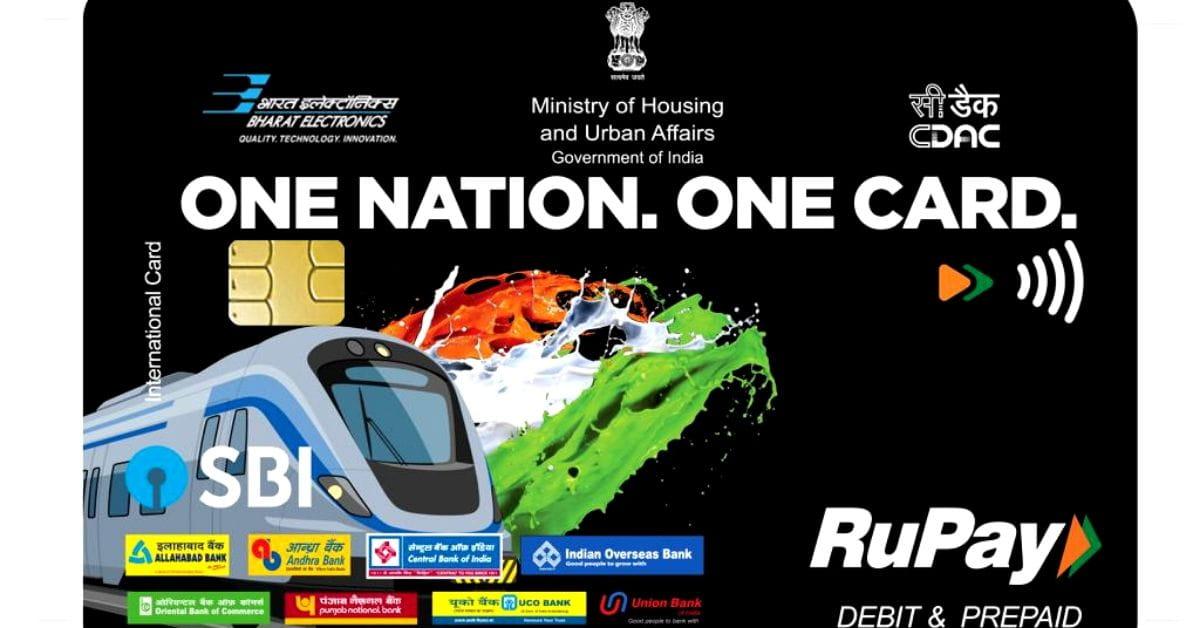
India is set to introduce a one-nation-one-card system for public transport that will allow commuters to use a common payment mechanism across different modes of transportation, NITI Aayog CEO Amitabh Kant said on Monday.
The proposed system is aimed at making public transport more convenient by enabling seamless connectivity between various modes, potentially reducing the need for commuters to use separate tickets or payment systems for different services.
Speaking at the "Future Mobility Summit-2018: India's Move to NextGen Transport Systems", Kant said an efficient transportation network was essential for economic development, particularly in a densely populated country like India.
He said the government's mobility strategy was focused on putting citizens at the centre of transport planning, with greater emphasis on sustainable public transport, transit-oriented development and digital technology.
"The objective of the strategy is to plan for the citizens first, rather than focusing on vehicles alone, by providing sustainable mobility and accessibility by switching to cleaner mode of transportation," Kant said.
The push for cleaner and more integrated mobility comes as Indian cities face growing problems related to traffic congestion and air pollution. Kant noted that road transport alone contributes around four per cent to India's GDP, while the sector remains heavily dependent on fossil fuels.
Rising oil imports, deteriorating air quality in major cities and concerns over climate change have made the development of a more sustainable transport system increasingly important for India's long-term economic growth, he said.
NITI Aayog Advisor Anil Srivastava said the government was working towards creating a stronger mobility ecosystem across the country by bringing together stakeholders from different departments.
He also encouraged citizens to adopt shared mobility rather than focusing primarily on private vehicle ownership.
"The citizens, on their part, should work towards sharing a ride, not owning the ride. The government has integrated many stake holders across departments to drive India's mobility vision," Srivastava said.
The one-nation-one-card initiative was expected to become an important part of India's broader digital and public transport strategy, with the potential to make travel across different transport networks simpler and more integrated for commuters.



© Copyright
Reporter Post.All Rights Reserved |
Powered by: Aptilogic Software |
 |
Page rendered in 0.0914 seconds.
|
Page rendered in 0.0914 seconds.