Mon, September 21, 2026
Ranchi, September 21: The Official Language Cell (Rajbhasha Prakoshth) of IIM Ranchi organised a Leadership Talk on Sunday as part of the ongoing Hindi Pakhwada 2026, with Prof. K.G. Suresh, Director of the India Habitat Centre, New Delhi, as the guest speaker.
Addressing students, faculty members and non-teaching staff, Prof. Suresh spoke on the significance of Hindi as an official language, management skills and the importance of effective communication and expression.
Recalling an important milestone in India’s linguistic history, he noted that Hindi was adopted as an official language on September 14, 1949. He said sustained efforts have since been made to promote Hindi internationally, with Hindi cinema also contributing significantly to its global reach.
Highlighting India’s multilingual character and the richness of its regional dialects, Prof. Suresh said Hindi should become “Sarvasparshi” — inclusive and capable of reaching people across linguistic and social backgrounds. He stressed the need to simplify the language so that it remains accessible to the masses.
He also described language as a fundamental right capable of influencing cultural and intellectual development. Referring to India’s diverse linguistic heritage, he observed that several English words have roots in Sanskrit and Indian regional languages.
Prof. Suresh described Hindi as an “elder sister” to other Indian languages, saying its role should be to encourage, support and help promote regional languages rather than overshadow them. He also urged young people to reconnect with books and literature, emphasising that reading is essential for intellectual growth.
Linking communication skills with management and leadership, he told management students that a strong command of language is an important quality for a successful manager. A manager, he said, must also be Sarvasparshi and able to connect with people effectively.
He emphasised the importance of combining clear expression with active listening, saying good listeners are better positioned to understand situations and arrive at sound conclusions. He also advised future managers to focus on “macro” rather than “micro” management, arguing that a broader approach helps build strong teams and promotes collaboration instead of a culture of blame.
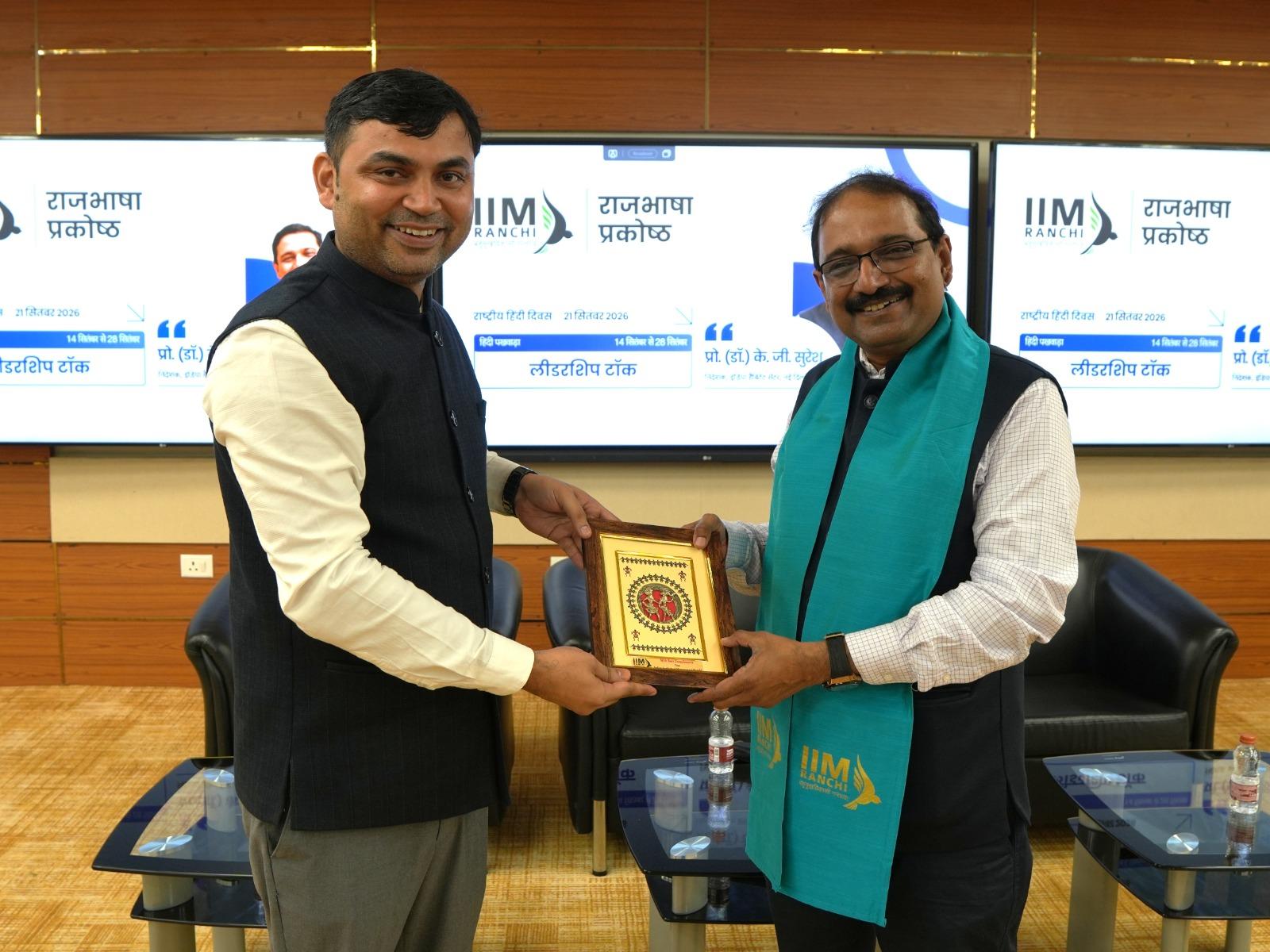
At the conclusion, programme coordinator Prof. Satyam presented a memento to Prof. Suresh as a token of appreciation. The session witnessed active participation from students, faculty members and non-teaching staff.



© Copyright
Reporter Post.All Rights Reserved |
Powered by: Aptilogic Software |
 |
Page rendered in 0.012 seconds.
|
Page rendered in 0.012 seconds.