Fri, August 28, 2026


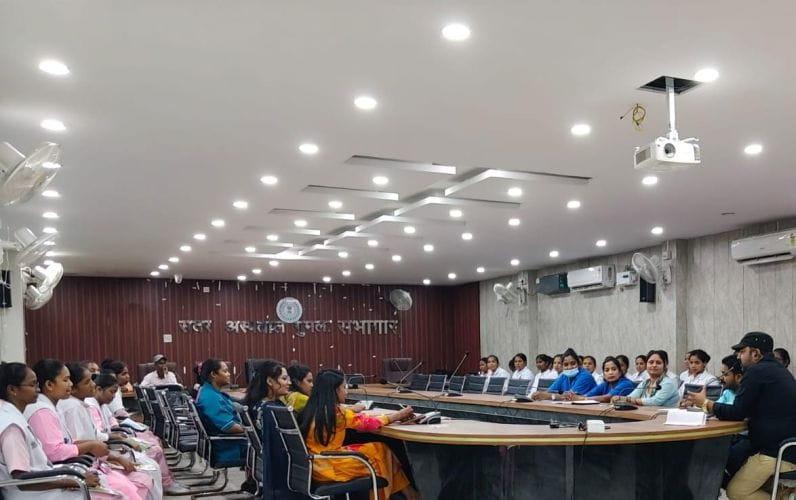
Photo: Reporter Post
A road safety awareness programme was organised at Sadar Hospital, Gumla, to educate nurses, doctors and other healthcare workers about traffic regulations, accident prevention and the legal provisions related to helping road accident victims.
The programme was conducted by the District Road Safety Team on the directions of Gumla Deputy Commissioner-cum-District Magistrate Dileshwar Mahto and District Transport Officer Satyendra Mahto.
During the session, healthcare workers were briefed on the importance of following traffic rules, wearing standard helmets and seat belts, carrying a valid driving licence and maintaining vehicle insurance. The team also explained the provisions related to Good Samaritans and hit-and-run cases.
The importance of timely medical intervention after an accident was highlighted, with special emphasis on the role of healthcare workers. The team explained that serious head injuries are among the major causes of death and permanent disability in road accidents. Proper use of helmets and seat belts can significantly reduce the risk of severe injuries.
The officials also explained the legal protection available to Good Samaritans. A person who voluntarily helps an accident victim cannot be unnecessarily subjected to police or legal harassment. Hospitals and police cannot force a helper to disclose their identity or pay for the victim's treatment. If a helper voluntarily provides their details, their name and mobile number should be recorded in the hospital register.
The team also stressed the importance of the "Golden Hour" — the first hour after an accident, when timely and appropriate medical treatment can greatly improve the chances of saving a victim's life. People witnessing an accident were urged not to gather around the injured person or delay treatment, but to arrange immediate transportation to the nearest hospital.
Hospitals were advised to accurately record the time of the accident and the time when the injured person reaches the facility. Maintaining these details helps establish a clear treatment timeline. Details of people who voluntarily assist victims should also be properly entered in the relevant register.
The programme also covered compensation provisions for accident victims. In cases resulting in death, the prescribed compensation is ?2 lakh, while victims suffering serious injuries are eligible for compensation of ?50,000, subject to applicable rules and conditions.
Officials further discussed the importance of keeping essential documents such as a valid driving licence and vehicle insurance. Information related to blood groups was also discussed as part of emergency preparedness and road safety awareness.
The district administration appealed to citizens to treat helmets, seat belts, valid driving licences and vehicle insurance not as a burden but as essential safeguards for life. People were also urged to come forward and help accident victims without hesitation, as timely assistance during the Golden Hour can make the difference between life and death.



© Copyright
Reporter Post.All Rights Reserved |
Powered by: Aptilogic Software |
 |
Page rendered in 0.1032 seconds.
|
Page rendered in 0.1032 seconds.