Sat, August 22, 2026


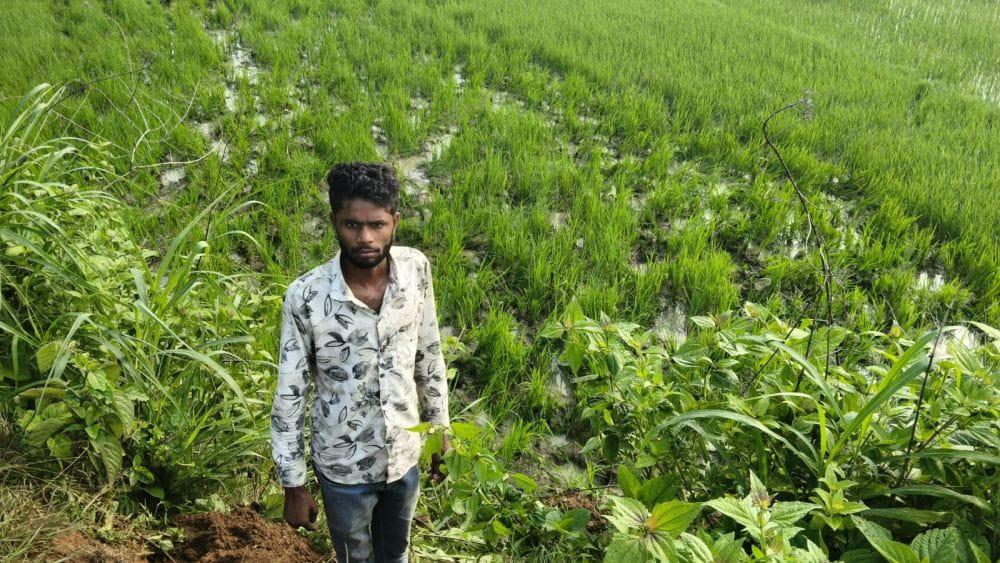
Photo: Reporter Post
Fear and uncertainty have gripped Murpa village in Gola block after a herd of around 44 wild elephants entered the area in the early hours of Saturday and damaged several acres of standing crops.
According to villagers, the herd entered Murpa from the Murmuta forest around 3 a.m. and moved through agricultural fields, trampling maize, paddy, groundnut and sweet potato crops. The elephants remained in the area for nearly two hours before returning towards the forest around 5 a.m.
The raid caused significant losses to farmers who had spent months cultivating their crops. Among those whose fields were reportedly damaged are Santosh Mahto, Lakhan Lal Mahto, Vishwanath Gupta, Birendra Mahto, Bablu Sao, Parasnath Bedia, Pankaj Bedia, Chandi Mahto and Vimal Mahto. Villagers said several other farmers also suffered crop losses.

Villagers demand long-term protection
Tijobala Devi, a panchayat samiti member from Banda panchayat, urged the Forest Department to assess the damage and provide appropriate compensation to affected farmers.
However, she said compensation alone cannot solve the problem. According to her, protecting the lives and property of villagers must remain the priority, particularly as elephant movement in the Gola area has increased in recent times.
Residents said repeated encounters with elephant herds have created serious safety concerns in villages located close to forest areas. They also pointed to recent incidents in the region in which villagers have reportedly lost their lives in elephant-related attacks.
Early warning and forest patrols needed
Villagers said merely driving elephants back into the forest after they enter populated areas is not enough. They have called for identification and regular monitoring of elephant movement corridors so that residents can be alerted before herds reach villages and farmland.
They also demanded increased night patrols by the Forest Department in vulnerable villages and a reliable system for quickly communicating information about elephant movement to residents.
Tijobala Devi said authorities should also work on a long-term strategy to guide elephants towards safer forest habitats and reduce repeated encounters with human settlements.
The latest incident highlights the growing human-elephant conflict in forest-fringe areas of Jharkhand. While farmers need timely compensation for crop losses, villagers say preventive measures, early-warning systems and safer elephant corridors are essential to reduce the risk of future encounters.
For communities living close to forests, the goal is not simply to drive elephants away after every incident, but to create conditions in which both people and wildlife can remain safe.



© Copyright
Reporter Post.All Rights Reserved |
Powered by: Aptilogic Software |
 |
Page rendered in 0.0973 seconds.
|
Page rendered in 0.0973 seconds.