Fri, May 15, 2026

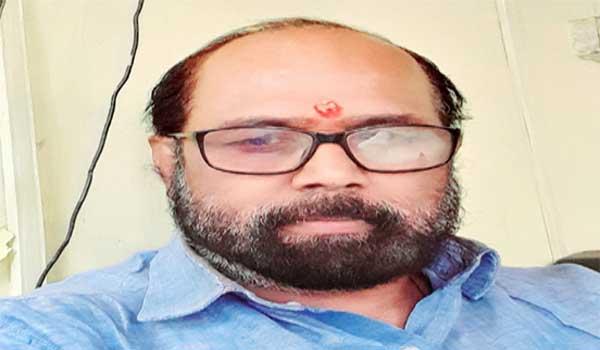
By: Vijay Shankar Nayak, Senior Leader, Jharkhand Congress: When the government led by Narendra Modi came to power in 2014, a major promise was made to the people of India — “Achhe Din Aayenge” (“Good days will come”).This was not merely an election slogan; it became the hope of millions of Indians. People believed that:- inflation would decrease, youth would get employment, farmers’ incomes would rise, the middle class would receive relief, and the lives of the poor would become easier. But after a decade, the common citizen of the country is compelled to ask:
Did the “good days” arrive only for big industrialists and the wealthy class?
Today, the income of the common man has remained almost stagnant, while expenses have multiplied several times over. Running a household is becoming increasingly difficult. From the kitchen to education, from healthcare to transportation — inflation has burdened the people in every sphere of life.
Rising Petrol and Diesel Prices: A Blow to Every Pocket
In 2014, petrol and diesel prices were relatively affordable for ordinary citizens. But by 2024, fuel prices had reached record highs.
2014 vs 2024
Fuel 2014 2024
Petrol ?71–72 per litre ?100–110 per litre
Diesel ?55 per litre ?88–95 per litre
This means: - Petrol became approximately 35–40% more expensive, Diesel became 60–70% costlier. Fuel is not only used for vehicles; its impact is felt across the entire market. When diesel prices rise: - transportation costs increase, vegetables become expensive, milk prices rise, groceries become costly, and ultimately every family kitchen is affected. The government cited international crude oil prices as the reason, but people also questioned why relief was not provided when crude oil prices declined globally. Why were heavy taxes on petrol and diesel continued?
LPG Cylinders: Out of Reach for the Poor
There was a time when LPG cylinders had become an essential necessity for middle-class and poor families. But today, gas cylinders once again feel like a “luxury.”
Year Price
2014 ?410–450
2024 ?900–1200
The government provided gas connections to millions of women under the Pradhan Mantri Ujjwala Yojana scheme, which was widely appreciated as a positive step. However, the real issue remains the refill cost. Today, millions of poor families are unable to afford cylinder refills. In many villages, people are once again forced to use firewood, cow dung cakes, and coal for cooking. This raises an important question:- If the poor cannot afford to refill the cylinder, what truly changed by merely providing a connection?
Why Has the Common Man’s Plate Shrunk?
While the country’s economy continued speaking of becoming a “Vishwaguru” (global leader), the common man’s food plate kept shrinking.
Prices of Everyday Essentials
Item 2014 2024
Milk ?36–40 ?60–70
Flour ?20–22 ?32–40
Pulses ?70–80 ?120–180
Edible Oil ?70–90 ?130–180
Today, poor families are struggling to: - buy pulses regularly, afford adequate milk, and purchase sufficient cooking oil and vegetables. Inflation is not merely a statistic — it directly affects family meals, children’s nutrition, and living standards.
Government Data Also Reflects the Reality of Inflation
According to the Reserve Bank of India and the Ministry of Statistics: - Retail inflation stood around 7.59% in 2020, Inflation remained above 7% for several months in 2022, In July 2023, inflation was recorded at approximately 7.44%. The government repeatedly claimed that inflation was under control, but ordinary citizens experienced little real relief in their daily lives.
Unemployment: The Broken Dream of India’s Youth
India is often called the world’s youngest nation. Yet today, it is the youth who appear the most disappointed. According to data from the Centre for Monitoring Indian Economy, the unemployment rate in 2025 stood at around 4.8%. However, an even greater concern than the numbers themselves is the quality and stability of employment. Major problems faced by youth today include: - repeated delays in recruitment examinations, paper leaks, vacant government posts remaining unfilled, contractual employment, and unstable private-sector jobs. Millions of students prepare for years, only to see examinations cancelled or recruitment processes left incomplete. This is no longer merely an economic crisis; it has become a social and psychological crisis as well.
Demonetization: What Did the Nation Gain?
In 2016, the government implemented demonetization. It was claimed that:- black money would be eliminated, corruption would reduce, fake currency would disappear, and terrorism would weaken. However, later reports from the Reserve Bank of India revealed that nearly 99.3% of the old currency notes returned to the banking system.
What was the result? Small businesses collapsed, daily wage laborers lost employment, the rural economy suffered, and the informal sector faced severe damage. Even today, many economists consider demonetization an economically unsuccessful decision.
COVID Lockdown: The Greatest Impact on the Poor
During the COVID-19 pandemic in 2020, a sudden nationwide lockdown was imposed with only a few hours’ notice. As a result: - millions of migrant workers walked back to their villages, small industries shut down, shops closed permanently, and millions lost their jobs. For the first time, the nation witnessed heartbreaking images of workers walking hundreds of kilometers on foot. At the same time, the wealth and profits of large corporate companies continued to grow. This gave rise to discussions about “Two India’s” —
one wealthy India, and another struggling India.
Tax Burden: Continuous Pressure on Citizens
Today, ordinary citizens pay taxes at multiple levels: - heavy taxes on petrol and diesel, GST on nearly every commodity, expensive electricity, costly education, and unaffordable healthcare. The middle class faces a unique problem: - they are not eligible for welfare schemes meant for the poor, yet they do not possess the income levels of the wealthy. As a result, both the middle class and the poor continue to face increasing pressure.
The Real Question of Development
If :- petrol is expensive, gas is expensive, food is expensive, jobs are scarce, paper leaks are frequent, farmers are distressed, and youth frustration is rising, then the public is asking:- “Where has the development actually happened?” Has development become limited only to: - grand events, glossy advertisements, television propaganda, and corporate profits?
Conclusion
Nationalist slogans do not make kitchen expenses cheaper. Television debates do not create jobs. And publicity campaigns do not eliminate economic hardship. Today, the people of India are asking fundamental questions: Where are the jobs? Why has inflation not been controlled? When will the future of the youth become secure? When will the poor and middle class receive relief? The demands of the people are simple: ?? Affordable kitchens ?? Cheaper fuel ?? Employment opportunities ?? Transparent and accountable governance ?? Relief in education and healthcare, In a democracy, the people have the right to ask questions — and it is the responsibility of the government to answer them.
(Author: Vijay Shankar Nayak, Senior Leader, Jharkhand Congress)




| 14-09-2018 | ||||||
| Sl No. | Parameters | Actual Data(µg/m3) | Standard Limit(µg/m3) |
|---|---|---|---|
| 1 | PM 10 | 64 | 100 |
| 2 | PM 2.5 | 33 | 60 |
| 3 | SO2 | 55.3 | 80 |
| 4 | NO2 | 58.2 | 80 |
| 14-09-2018 | ||||||
| Station | Temperature(degree centigrade) | Rainfall(mm) | Relative humidity(%) | |||
|---|---|---|---|---|---|---|
| Max | Min | Past 24 hrs. | Since 1st March, 2018 | Max | Min | |
| Ranchi | 31.0 | 22.5 | 000.0 | 1010.1 | 95 | 66 |
| Jamshedpur | 34.1 | 26.2 | 000.0 | 1252.8 | 87 | 58 |
| Bokaro | 33.5 | 24.6 | 015.2 | 824.0 | 92 | 79 |
| Daltonganj | 32.6 | 24.9 | 004.2 | 960.9 | 95 | 67 |
© Copyright
Reporter Post.All Rights Reserved |
Powered by: Aptilogic Software |
 |
Page rendered in 0.1193 seconds.
|
Page rendered in 0.1193 seconds.