Wed, October 21, 2026


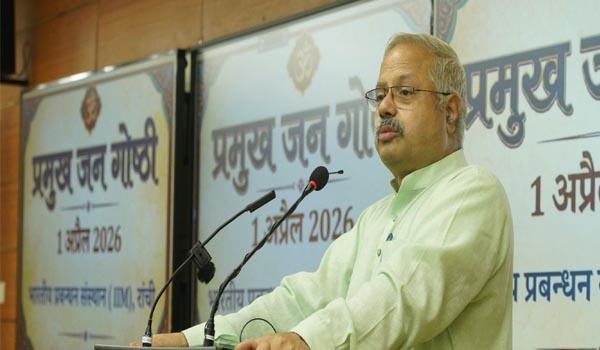
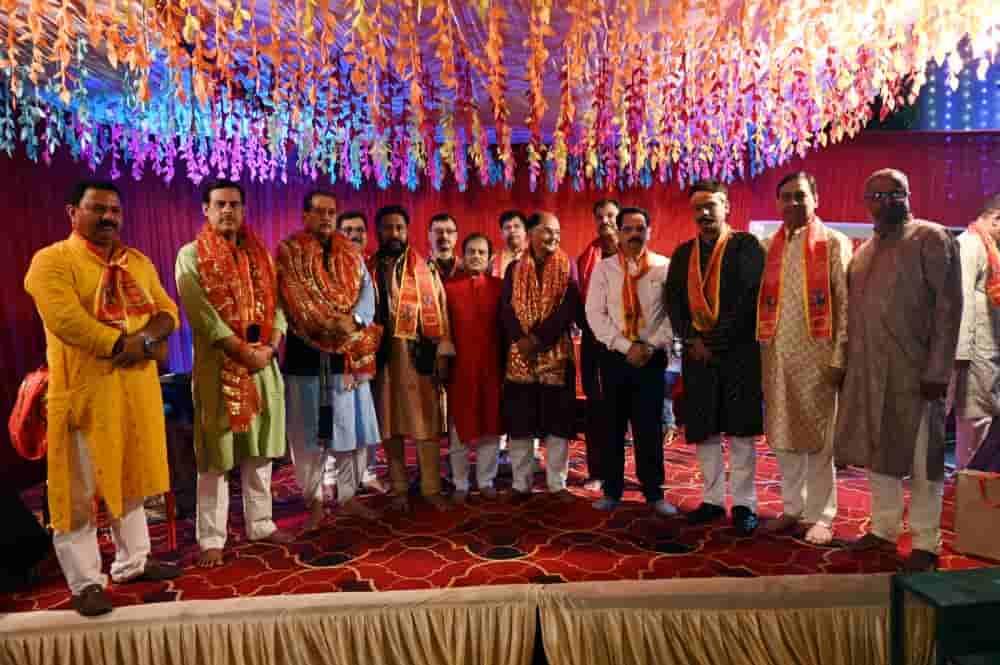
Ranchi: A grand and intellectually engaging Pramukh Jan Goshti (distinguished public interaction program) was held at the Indian Institute of Management Ranchi, bringing together prominent voices from education, administration, healthcare, media, and social sectors. The event featured Sunil Ambekar, Akhil Bharatiya Prachar Pramukh of the Rashtriya Swayamsevak Sangh, as the chief speaker.
The program began with the traditional lighting of the lamp, followed by a welcome address. Rajiv Kamal Bittu outlined the objective of the gathering, emphasizing the importance of dialogue among various sections of society during the centenary year of the RSS to ensure broader participation in nation-building.
In his keynote address, Ambekar traced the 100-year journey of the RSS, which began on Vijayadashami in 1925 and has since evolved into a vast socio-cultural movement. He noted that awareness and curiosity about the organization have grown significantly, with people from diverse backgrounds now actively engaging in discussions about its ideology and work.
Describing the RSS as more than just an organization, Ambekar said it is an experience that must be understood through participation rather than words alone. He elaborated on the vision of founder Keshav Baliram Hedgewar, who dedicated his life to national reconstruction after observing the social fragmentation during British rule. Hedgewar believed that a disorganized society was the root cause of India’s weakness, leading to the creation of the RSS to foster unity beyond caste, creed, and language.
Ambekar stressed that character building and individual development remain central to the RSS’s approach, with its daily shakhas promoting discipline, values, and patriotism. He also detailed the concept of Panch Parivartan (Five Transformations) introduced in the centenary year—family awakening, social harmony, environmental protection, self-awareness, and civic responsibility—aimed at holistic societal change.
The event was attended by several eminent personalities, including Deepak Srivastava and D K Singh, among others.
The program concluded with an interactive Q&A session, where participants engaged in meaningful discussions, making the event both insightful and impactful.



© Copyright
Reporter Post.All Rights Reserved |
Powered by: Aptilogic Software |
 |
Page rendered in 0.0116 seconds.
|
Page rendered in 0.0116 seconds.