Sat, October 10, 2026

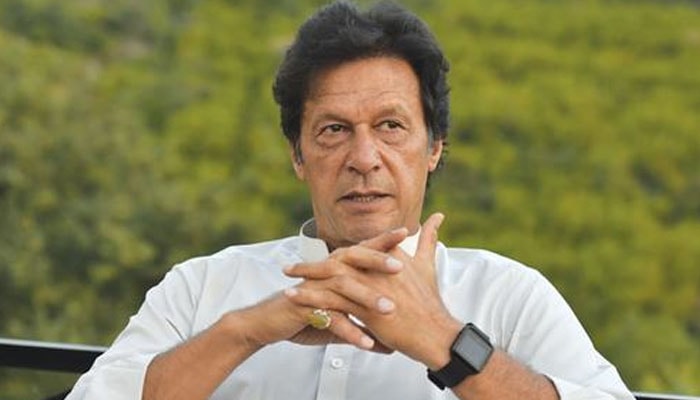
Image for representational purpose only
Former cricketer and Pakistan Tehreek-e-Insaf (PTI) chairman Imran Khan was elected Pakistan’s 22nd Prime Minister on Friday, three weeks after his party emerged as the largest group in the country’s general election.
The 65-year-old politician secured 176 votes in the National Assembly, defeating Pakistan Muslim League-Nawaz (PML-N) candidate Shehbaz Sharif, who received 96 votes, National Assembly Speaker Asad Qaiser announced.
Khan was scheduled to take oath as Prime Minister on Saturday in a ceremony to be administered by President Mamnoon Hussain.
His election, however, took place amid a noisy protest by opposition lawmakers, who raised slogans alleging that the July 25 general election had been manipulated. PTI lawmakers, meanwhile, celebrated Khan’s victory inside the National Assembly.
Addressing the House amid the commotion, Khan promised to bring the “change” he said Pakistanis had been seeking for years. He also pledged strict accountability and vowed to take action against those accused of misusing public money.
Khan said he had reached the country’s highest political office after a 22-year political struggle rather than through the backing of a military ruler. He compared his political journey with that of Pakistan’s founder, Muhammad Ali Jinnah, whom he described as his inspiration.
The new Prime Minister also promised to pursue money allegedly transferred abroad through corruption and said such resources should instead have been used for essential sectors such as healthcare, education and water.
Responding to opposition allegations of electoral fraud, Khan questioned why the constituencies he had previously demanded be investigated had not been properly scrutinised.
The Pakistan People’s Party (PPP), the third-largest party in the National Assembly, ultimately did not vote for Shehbaz Sharif after deciding to abstain from the prime ministerial election. A member of Jamaat-e-Islami also abstained.
Khan’s election marked a dramatic transition from an internationally celebrated cricket career to the leadership of Pakistan. His political movement, PTI, had campaigned on promises of tackling corruption, improving governance and creating what it described as a “Naya Pakistan” or new Pakistan.
One of the PTI-led government’s early priorities was expected to be a major reshuffle of the federal and provincial bureaucracy under its first 100-day programme. According to reports, the plan included replacing officials and heads of government institutions who were believed to have been appointed under political influence.
Among the institutions reportedly under consideration for leadership changes were the Federal Board of Revenue, Pakistan Railways and Pakistan International Airlines.
The new government also faced several major policy challenges, including administrative reforms, economic pressures and questions surrounding the future structure of Pakistan’s provinces and tribal areas.
PTI leaders had earlier discussed plans to merge the Federally Administered Tribal Areas with Khyber Pakhtunkhwa, consider the creation of a South Punjab province and strengthen the authority of the government in Balochistan.
Khan’s election therefore marked not just a change of government but the beginning of a closely watched political experiment, with his supporters expecting sweeping reforms while the opposition remained determined to challenge the legitimacy and policies of the new administration.



© Copyright
Reporter Post.All Rights Reserved |
Powered by: Aptilogic Software |
 |
Page rendered in 0.0143 seconds.
|
Page rendered in 0.0143 seconds.