Thu, November 19, 2026
Jamshedpur, November 19, 2026:
Samvaad 2026, Tata Steel Foundation’s signature tribal conclave ended on late Thursday evening in Gopal Maidan. This year, the 13th edition of the conclave, witnessed 2500 participants belonging to 165 tribes from 25 states and one union territory of India converged in Jamshedpur. 55 per cent of the participants attended for the first time. 15 per cent of the total participants belonged to the Particularly Vulnerable Tribal Groups (PVTG). A total of 32 tribes from Jharkhand participated this year. In 2014 when Samvaad began there were 40 tribes from 19 states.
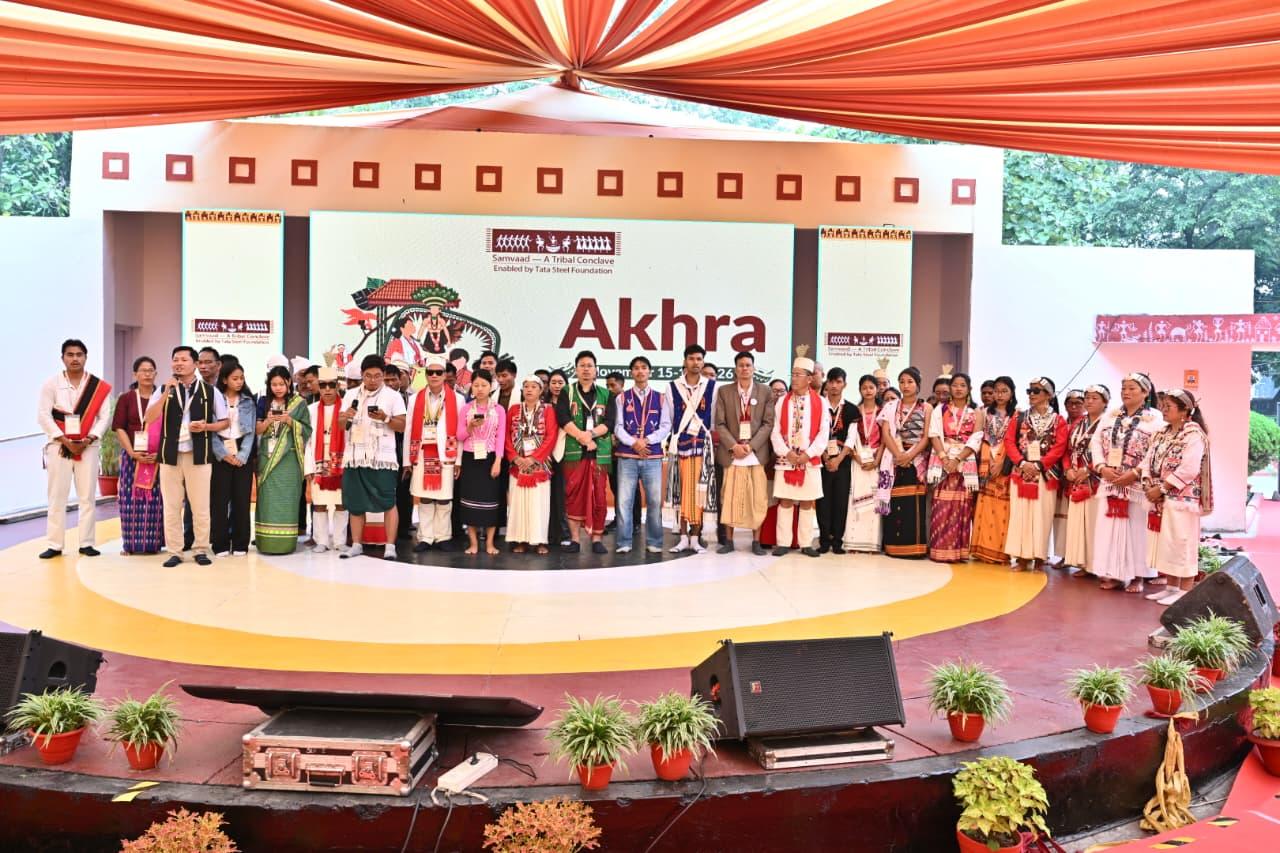
The day began with a prayer from a group of tribes of the Northeast at Akhra, a place for conversation and introspection among the tribes. Each successive day at Samvaad witnessed different tribes start the day with their prayers. “In a rapidly changing world, where do tribes find themselves”, was the thought that began the day.
The final day marked an important milestone in the Samvaad Fellowship journey, celebrating the work of past Fellows and welcoming a new cohort committed to documenting and preserving tribal heritage. Seven books authored by former Samvaad Fellows were released, covering tribal languages, cuisine, music, oral traditions, instruments, agrarian heritage and textiles.
The 2026 Fellowship journey also welcomed seven new Fellows from Jharkhand, Jammu and Kashmir, Ladakh, Mizoram, West Bengal and Kerala. The new proposed projects span themes that includes Changpa folk songs, Oraon oral wisdom, Mizo cultural traditions, Malayaraya linguistic and literary heritage, the Toto festival cycle, Gujjar-Bakarwal cultural archives and traditional Ho games.
“Samvaad stands out for its warmth, inclusivity, and genuine encouragement. Every participant is given a voice, which makes the platform truly impactful.”, said Manoj Kujur, Samvaad Fellow 2026, belonging to the Oraon tribe in Jharkhand.
The conclave also concluded the 9th edition of Samuday Ke Saath – National Short Film Competition, celebrating tribal stories, identities and lived experiences through cinema. This year, the competition received 63 entries representing 11 tribes across 11 states and Union Territories, with 50 entries in the Institutional Category and 13 in the Community Category. 25 films were shortlisted for final evaluation. In the Community Category, Aydari won the Popular Choice award, The Trail of Pahugun received the Special Jury award, and Agam and Chinhari: Syahi Pehchan Ki were recognised as Best Films. In the Institutional Category, Jamuna Tudu: The Lady Tarzan won the Popular Choice award, Haq Ki Aawaz received the Special Jury award, Jangaliya secured third place, Chugti Chiria, Udta Gufaan, Pehre pe Baitha Kaak Bhagoda shared second place, and A River Colored Red by Sourav Kumar Munda won the first prize.
The results were announced in the presence of Ganesh Nagarajan, Deputy Secretary, Ministry of Tribal Affairs, D. B. Sundara Ramam, Director, Tata Steel Foundation and Sourav Roy, CEO, Tata Steel Foundation.
Reflecting on Samvaad 2026, Sourav Roy, CEO, Tata Steel Foundation, said: “My warmest congratulations to the winners of the 9th Samuday Ke Saath National Short Film Competition, our seven newly selected Samvaad Fellows, and the authors of the newly released seven fellowship books, and each and every Samvaad participant. As Samvaad 2026 draws to a close, one question stays with us: in a rapidly changing world, what must we adapt, and what must we hold onto? Over the last five days in Jamshedpur, communities showed us that true progress lies in building our own strength, staying rooted in who we are, and learning from one another. The dialogue does not end here. We look forward to returning next November for another edition of Samvaad and another opportunity to listen, learn and grow together.”
Over five inspiring days, Samvaad came alive with the sights, sounds, flavours and wisdom of tribal communities from across India. From the vibrant Akhra and cultural celebrations to conversations on Healing Practices, Tribal Cuisine, Art and Handicrafts, Samuday Ke Saath and the Samvaad Fellowship, the gathering offered a living expression of tribal knowledge, creativity and resilience. Johar Haat showcased the craftsmanship of artists and artisans, while Aatithya invited visitors to savour the rich diversity of tribal cuisines.
“When people come together to share what they know, the conversation becomes a bridge between generations, communities and cultures”, said 36-year-old Jaincy John of Araya tribe from Kerala. For five days in Jamshedpur, Samvaad 2026 created such a space, where traditional healers shared knowledge, communities celebrated their food and cultural practices, researchers documented heritage, and filmmakers told stories in their own voices.
As Samvaad 2026 concludes, its conversations continue through the research being documented, the traditional practices being strengthened, the films being created, the livelihoods and products being developed, and, most importantly, through the communities who continue to tell their stories and carry their knowledge forward in their own voices.



© Copyright
Reporter Post.All Rights Reserved |
Powered by: Aptilogic Software |
 |
Page rendered in 0.0144 seconds.