Mon, November 09, 2026

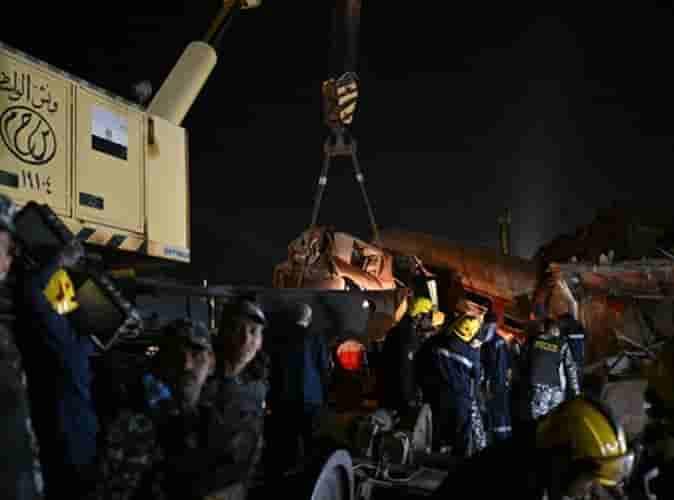
Photo: IANS
Cairo: The death toll from a collision between two trains in Egypt's Giza governorate has increased to seven, while 112 people have been injured, the country's Ministry of Health and Population said on Monday.
In an update, the ministry said 45 injured passengers had been discharged from hospitals after their conditions improved following medical treatment. Another seven patients were expected to leave hospital soon, while the remaining victims continued to receive medical care under observation.
Rescue operations were launched immediately after Sunday's accident, with 72 ambulances deployed to evacuate the injured and transport them to hospitals across Giza and the neighbouring Beni Suef governorate, the ministry said in an earlier statement.
Health Minister Khaled Abdel Ghaffar directed medical facilities in both governorates to remain on high alert and ensure that all necessary emergency services and treatment were available to those injured in the collision.
Egyptian President Abdel Fattah El-Sisi said he was closely monitoring the situation. In a message on Facebook, he expressed condolences to the families of those who lost their lives and wished the injured a speedy recovery.
The President also instructed government agencies to ensure proper medical care for the victims, conduct a swift investigation into the accident and take action against anyone found responsible for negligence.
According to the Egyptian National Railways Authority, the collision took place between Kafr Ammar and Al-Raqqa stations. A train operating on the Giza-Fayoum route struck the rear of another train travelling on the Cairo-Aswan route.
Following the accident, emergency response teams and heavy cranes were sent to the site to clear the damaged railway section and remove the remaining carriages. Authorities said efforts were underway to restore train services in both directions as quickly as possible.
The latest accident has once again raised concerns about railway safety in Egypt, where an ageing rail network, outdated equipment and management shortcomings have contributed to several major accidents over the years.
One of the country's worst railway disasters occurred in 2002, when a fire broke out aboard a passenger train travelling from Cairo to Luxor in Giza's Ayyat district, killing more than 380 people.
The latest collision adds to the pressure on Egyptian authorities to improve railway infrastructure, strengthen safety procedures and ensure greater accountability to prevent similar tragedies.



© Copyright
Reporter Post.All Rights Reserved |
Powered by: Aptilogic Software |
 |
Page rendered in 0.0088 seconds.