Thu, June 11, 2026
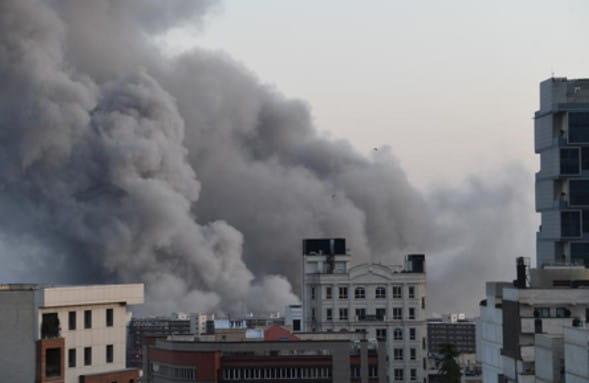
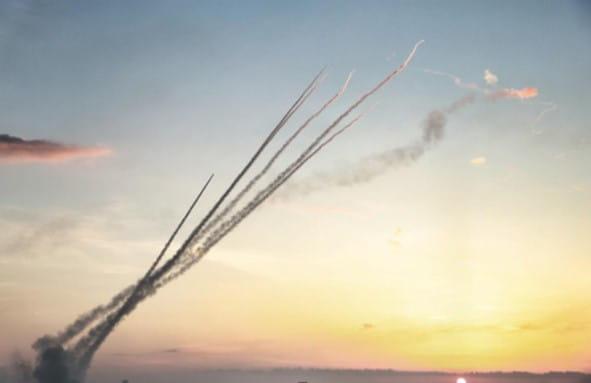
Washington: The United States carried out a fresh wave of military strikes against targets in Iran on Wednesday, as President Donald Trump warned that military action would intensify unless Tehran agrees to a nuclear agreement with Washington.
According to US officials, the operation began at 5:15 p.m. Eastern Time when US Central Command (CENTCOM) launched what it described as additional self-defence strikes under orders from President Trump.
Speaking to reporters after meeting CENTCOM commanders at MacDill Air Force Base in Florida, Secretary of War Pete Hegseth said the US military was prepared to increase pressure on Iran if negotiations continued to stall.
“Hitting Iran hard is exactly what President Trump said we would do, and that is what we are doing,” Hegseth said. He added that Iran still had an opportunity to reach an agreement on its nuclear programme.
At the White House, Trump expressed frustration over the pace of talks, saying months of negotiations had failed to produce a breakthrough.
“We were close to a deal, but Iran keeps delaying and avoiding a final commitment,” Trump said. “The agreement on the table would permanently prevent Iran from obtaining a nuclear weapon.”
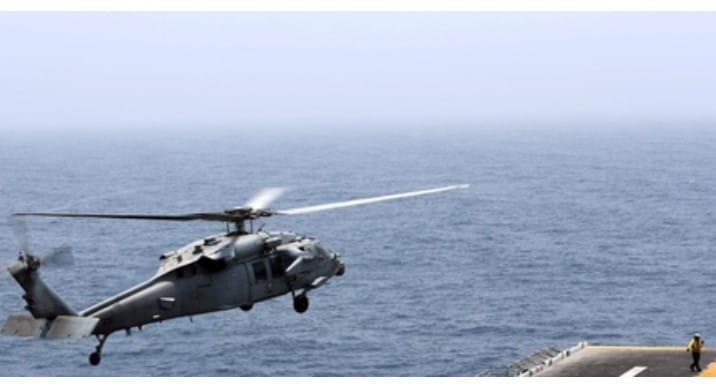
The latest escalation follows the reported downing of a US Army AH-64 Apache helicopter near Oman earlier this week. Trump said the crew was rescued safely but vowed a strong response.
“We hit them hard yesterday, and we’ll hit them hard again today,” he said. “Iran cannot have a nuclear weapon. That’s non-negotiable.”
CENTCOM said the military action was a response to what it called Iran’s continued aggression. Earlier in the day, the command also announced action against a tanker allegedly transporting Iranian oil in violation of an American-led blockade.
US officials said a military aircraft targeted the engine room of the Palau-flagged tanker M/T Settebello after repeated warnings and instructions were ignored by its crew.
Hegseth stressed the strategic importance of the Strait of Hormuz, claiming US-led operations had ensured the safe movement of more than 100 million barrels of oil through the vital shipping route in recent weeks.
“The United States and its partners continue to maintain security in the Strait of Hormuz,” he said.
The Pentagon chief also claimed that recent operations had significantly weakened Iran’s military capabilities and warned that further strikes remained an option if Tehran refused to engage constructively.
Both Trump and Hegseth maintained that diplomacy remains possible, but only if Iran agrees to a deal that permanently bars it from developing nuclear weapons.
“All they have to do is sign the agreement,” Trump said. “Military pressure and diplomacy are both on the table, but Iran cannot and will not be allowed to obtain a nuclear weapon.”
With inputs from IANS




| 14-09-2018 | ||||||
| Sl No. | Parameters | Actual Data(µg/m3) | Standard Limit(µg/m3) |
|---|---|---|---|
| 1 | PM 10 | 64 | 100 |
| 2 | PM 2.5 | 33 | 60 |
| 3 | SO2 | 55.3 | 80 |
| 4 | NO2 | 58.2 | 80 |
| 14-09-2018 | ||||||
| Station | Temperature(degree centigrade) | Rainfall(mm) | Relative humidity(%) | |||
|---|---|---|---|---|---|---|
| Max | Min | Past 24 hrs. | Since 1st March, 2018 | Max | Min | |
| Ranchi | 31.0 | 22.5 | 000.0 | 1010.1 | 95 | 66 |
| Jamshedpur | 34.1 | 26.2 | 000.0 | 1252.8 | 87 | 58 |
| Bokaro | 33.5 | 24.6 | 015.2 | 824.0 | 92 | 79 |
| Daltonganj | 32.6 | 24.9 | 004.2 | 960.9 | 95 | 67 |
© Copyright
Reporter Post.All Rights Reserved |
Powered by: Aptilogic Software |
 |
Page rendered in 0.0883 seconds.
|
Page rendered in 0.0883 seconds.