Fri, May 29, 2026

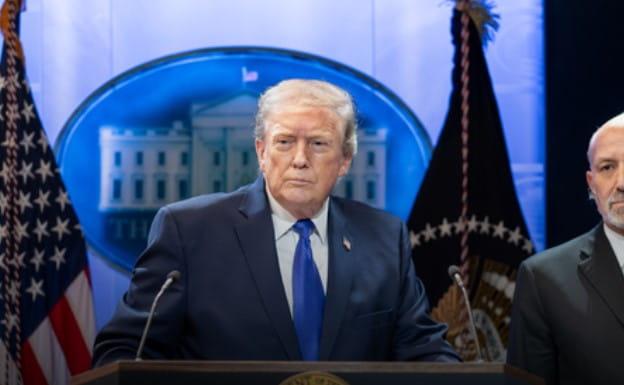
Washington- The administration of Donald Trump has set three strict conditions for any future agreement with Iran, with US Treasury Secretary Scott Bessent saying Tehran must give up its highly enriched uranium, stop pursuing nuclear weapons and ensure free movement through the Strait of Hormuz.
Speaking during a White House briefing, Bessent said discussions between Washington and Tehran were still underway, but avoided confirming reports suggesting that a preliminary agreement had already been reached.
“The teams have been going back and forth,” Bessent told reporters, adding that Trump had clearly outlined his expectations during a Cabinet meeting held a day earlier.
According to Bessent, the US President’s position is firm: Iran must surrender its stockpile of highly enriched uranium, abandon any effort to develop nuclear weapons and guarantee open maritime navigation through the strategically important Strait of Hormuz.
“He’s not going to take a bad deal. He’s going to make a great deal for the American people,” Bessent said while defending the administration’s negotiating approach.
When repeatedly asked about reports of a possible temporary agreement, including a 60-day ceasefire extension and continuation of nuclear talks, the Treasury Secretary refrained from giving direct answers.
“Everything depends on what the president wants to do,” he said. “It’s always a mistake to get out ahead of the president.”
Bessent claimed that the Trump administration’s combination of economic sanctions and military pressure had forced Iran back to the negotiating table.
“President Trump has done something that no other administration was able to do. We have gotten the Iranians to talk about their nuclear program and perhaps commit to not having one,” he said.
He also indicated that sanctions relief would only be considered if Iran agrees to Washington’s demands.
“Nothing is going to be on the table until we see the Strait of Hormuz open and the Iranians agree that they have to turn over the highly enriched uranium and that they can’t have a nuclear program,” Bessent stated.
While emphasising that diplomacy remains the preferred option, Bessent warned that military action could once again become a possibility if negotiations fail.
“President Trump always prefers a peace deal,” he said, before adding, “If President Trump doesn’t think he can get a peace deal, then kinetic is back.”
The Treasury Secretary further alleged that pressure from Washington had created divisions within Iran’s power structure, which he described as being made up of the elected government, the Islamic Revolutionary Guard Corps (IRGC) and the clerical establishment.
With inputs from IANS




| 14-09-2018 | ||||||
| Sl No. | Parameters | Actual Data(µg/m3) | Standard Limit(µg/m3) |
|---|---|---|---|
| 1 | PM 10 | 64 | 100 |
| 2 | PM 2.5 | 33 | 60 |
| 3 | SO2 | 55.3 | 80 |
| 4 | NO2 | 58.2 | 80 |
| 14-09-2018 | ||||||
| Station | Temperature(degree centigrade) | Rainfall(mm) | Relative humidity(%) | |||
|---|---|---|---|---|---|---|
| Max | Min | Past 24 hrs. | Since 1st March, 2018 | Max | Min | |
| Ranchi | 31.0 | 22.5 | 000.0 | 1010.1 | 95 | 66 |
| Jamshedpur | 34.1 | 26.2 | 000.0 | 1252.8 | 87 | 58 |
| Bokaro | 33.5 | 24.6 | 015.2 | 824.0 | 92 | 79 |
| Daltonganj | 32.6 | 24.9 | 004.2 | 960.9 | 95 | 67 |
© Copyright
Reporter Post.All Rights Reserved |
Powered by: Aptilogic Software |
 |
Page rendered in 0.1092 seconds.
|
Page rendered in 0.1092 seconds.