Wed, May 13, 2026

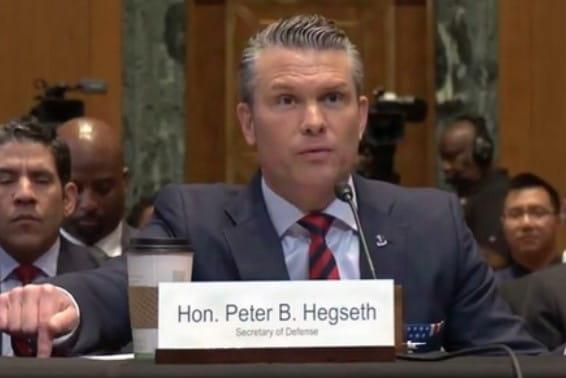
Washington: The future of the strategically important Diego Garcia military base became a major topic during a heated US Senate hearing, as concerns grew over China’s potential influence in the Indian Ocean through the Chagos Islands dispute.
During a Senate Appropriations Subcommittee on Defence hearing on President Donald Trump’s proposed $1.5 trillion defence budget, Republican Senator John Kennedy criticised reported plans by British Prime Minister Keir Starmer regarding the Chagos Islands and Mauritius.
Kennedy alleged that Mauritius has close ties with China and warned that granting greater control over the islands could eventually threaten American strategic interests in the region.
Speaking during the hearing, Kennedy claimed that handing over the Chagos Islands could effectively provide China indirect access to Diego Garcia, one of the United States’ most important overseas military bases.
US Secretary of Defense Pete Hegseth did not directly endorse Kennedy’s remarks but emphasised the critical military value of the base.
Hegseth told lawmakers that Diego Garcia remains a highly strategic location and said continued US military access there would be crucial in the future.
Kennedy further accused the British government of negotiating what he described as a “bad deal” that could weaken Western security interests in the Indian Ocean region.
Responding to the concerns, Hegseth said President Trump had also expressed reservations regarding the proposed arrangements involving Diego Garcia.
He added that any agreement imposing operational limitations on US forces stationed at the island would be problematic for American defence interests.
The exchange highlighted increasing anxiety in Washington over China’s expanding influence across the Indian Ocean and its growing engagement with smaller island nations near key global maritime routes.
Diego Garcia has long served as a major logistics, surveillance and operational hub for US military missions across the Middle East, Africa and the Indo-Pacific. The base played a significant role during the Iraq and Afghanistan wars and continues to remain central to America’s strategic presence in the region.
With inputs from IANS




| 14-09-2018 | ||||||
| Sl No. | Parameters | Actual Data(µg/m3) | Standard Limit(µg/m3) |
|---|---|---|---|
| 1 | PM 10 | 64 | 100 |
| 2 | PM 2.5 | 33 | 60 |
| 3 | SO2 | 55.3 | 80 |
| 4 | NO2 | 58.2 | 80 |
| 14-09-2018 | ||||||
| Station | Temperature(degree centigrade) | Rainfall(mm) | Relative humidity(%) | |||
|---|---|---|---|---|---|---|
| Max | Min | Past 24 hrs. | Since 1st March, 2018 | Max | Min | |
| Ranchi | 31.0 | 22.5 | 000.0 | 1010.1 | 95 | 66 |
| Jamshedpur | 34.1 | 26.2 | 000.0 | 1252.8 | 87 | 58 |
| Bokaro | 33.5 | 24.6 | 015.2 | 824.0 | 92 | 79 |
| Daltonganj | 32.6 | 24.9 | 004.2 | 960.9 | 95 | 67 |
© Copyright
Reporter Post.All Rights Reserved |
Powered by: Aptilogic Software |
 |
Page rendered in 0.1003 seconds.
|
Page rendered in 0.1003 seconds.