Sat, May 09, 2026
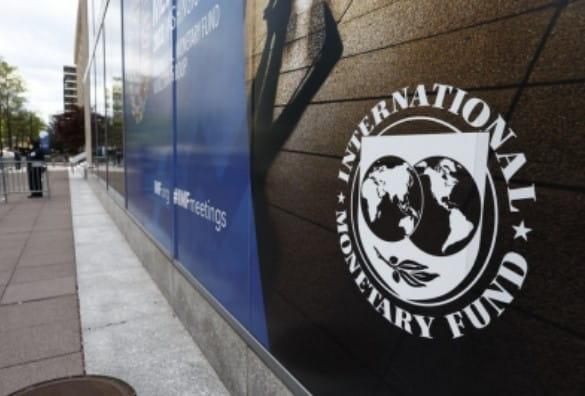
Washington - The International Monetary Fund has approved nearly $1.3 billion in fresh funding for Pakistan after successfully completing key reviews under its ongoing reform and climate-support programmes.
The IMF Executive Board cleared the third review of Pakistan’s Extended Fund Facility (EFF) and the second review of the Resilience and Sustainability Facility (RSF), enabling the immediate release of around $1.1 billion under the EFF and an additional $220 million through the RSF programme.
With the latest approval, Pakistan’s total disbursements under both programmes have now reached approximately $4.8 billion.
The IMF said Pakistan’s consistent implementation of reforms, despite challenges arising from the ongoing conflict in the Middle East, has helped maintain economic stability while improving external financing conditions.
The programme, approved in September 2024, is aimed at strengthening Pakistan’s economy through fiscal reforms, broader tax collection and improvements in public institutions.
According to the IMF, Pakistan has shown encouraging progress in recent months. The country’s fiscal performance remains strong, with a primary surplus of 1.6 per cent of GDP projected for the 2026 financial year.
Foreign exchange reserves have also improved significantly, increasing from $14.5 billion in June 2025 to nearly $16 billion by the end of December.
However, the IMF noted that inflationary pressures have increased due to rising global commodity prices, which have pushed up domestic energy costs.
IMF Deputy Managing Director Nigel Clarke said Pakistan’s strong implementation of the reform programme has supported macroeconomic stability and helped rebuild fiscal and foreign exchange buffers.
He added that GDP growth has accelerated, inflation has remained relatively under control and the current account stayed broadly balanced during the first nine months of FY26.
At the same time, Clarke warned that risks to the economy remain high because of an uncertain global environment and the impact of the Middle East conflict. He stressed the need for Pakistan to continue pursuing strong economic policies and structural reforms.
The IMF also emphasised the importance of maintaining fiscal discipline and said Pakistan must remain committed to its FY26 and FY27 fiscal targets to strengthen long-term economic credibility.
On monetary policy, the IMF advised Pakistan’s central bank to maintain a tight policy stance in order to keep inflation expectations under control.
Energy sector reforms were highlighted as another major priority. The IMF said energy prices should better reflect actual costs while ensuring support for vulnerable households.
The organisation also called for deeper structural reforms, including the privatisation of state-owned enterprises and stronger anti-corruption measures.
The climate-focused RSF programme will support Pakistan’s disaster management systems, water resource planning and climate-risk reporting mechanisms.
Pakistan’s economy has struggled in recent years due to repeated external shocks, volatile global commodity prices and regional tensions. The IMF programme remains a crucial pillar for stabilising the economy, rebuilding foreign reserves and restoring investor confidence.
With inputs from IANS




| 14-09-2018 | ||||||
| Sl No. | Parameters | Actual Data(µg/m3) | Standard Limit(µg/m3) |
|---|---|---|---|
| 1 | PM 10 | 64 | 100 |
| 2 | PM 2.5 | 33 | 60 |
| 3 | SO2 | 55.3 | 80 |
| 4 | NO2 | 58.2 | 80 |
| 14-09-2018 | ||||||
| Station | Temperature(degree centigrade) | Rainfall(mm) | Relative humidity(%) | |||
|---|---|---|---|---|---|---|
| Max | Min | Past 24 hrs. | Since 1st March, 2018 | Max | Min | |
| Ranchi | 31.0 | 22.5 | 000.0 | 1010.1 | 95 | 66 |
| Jamshedpur | 34.1 | 26.2 | 000.0 | 1252.8 | 87 | 58 |
| Bokaro | 33.5 | 24.6 | 015.2 | 824.0 | 92 | 79 |
| Daltonganj | 32.6 | 24.9 | 004.2 | 960.9 | 95 | 67 |
© Copyright
Reporter Post.All Rights Reserved |
Powered by: Aptilogic Software |
 |
Page rendered in 0.0827 seconds.
|
Page rendered in 0.0827 seconds.