Sat, October 24, 2026

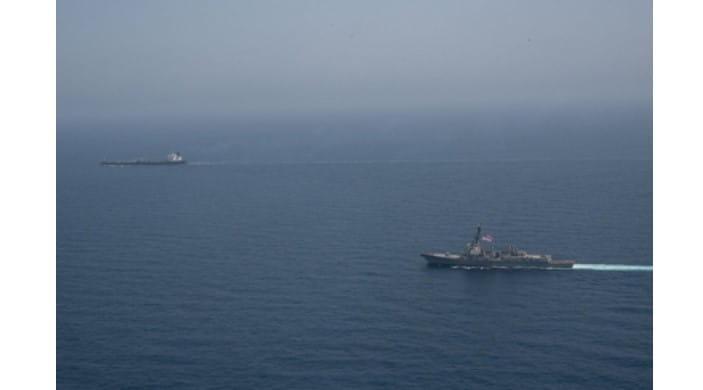
Washington — The United States military has confirmed that its naval blockade targeting Iranian ports remains fully operational, with enforcement measures continuing across key maritime routes in West Asia.
In a statement shared on social media, the United States Central Command said forces are actively implementing US sanctions and restricting vessels attempting to enter or exit Iranian ports. According to the update, at least 37 ships have already been redirected since the blockade began.
One such vessel, identified as Sevan, was intercepted in the Arabian Sea and is currently complying with US directives to return toward Iran under military escort.
The blockade was initiated following an announcement by Donald Trump on April 12, directing the US Navy to stop ships transiting through the strategically vital Strait of Hormuz. The move came shortly after US-Iran talks held in Islamabad failed to yield a breakthrough.
Iran has strongly opposed the action. President Masoud Pezeshkian warned that any threat to the security of the Strait of Hormuz could have far-reaching consequences for global trade, given the waterway’s critical role in international oil shipments.
Escalating rhetoric has followed from Iran’s military leadership as well. The Khatam al-Anbiya Central Headquarters reiterated its readiness to respond if what it termed as US “blockade” actions continue in the region.
Meanwhile, diplomatic efforts appear to have stalled further. Trump announced the cancellation of a planned visit by US representatives to Islamabad for renewed talks, citing internal divisions within Iran’s leadership and lack of progress in negotiations.
The situation remains fluid, with both sides maintaining firm positions. While a ceasefire understanding has been extended for now, the continued naval blockade signals ongoing friction with potential implications for regional stability and global trade flows.
With inputs from IANS



© Copyright
Reporter Post.All Rights Reserved |
Powered by: Aptilogic Software |
 |
Page rendered in 0.0107 seconds.
|
Page rendered in 0.0107 seconds.