Mon, October 12, 2026


New Delhi — With maritime traffic through the Strait of Hormuz nearly at a standstill, China’s “fragile, export-dependent economy” and its reliance on discounted Iranian crude could face “real problems” within two months if the disruption continues, according to a report.
Gordon Chang, senior fellow at the Gatestone Institute, said in an interview with Fox Business that a significant portion of Iran’s oil exports is routed to China through the strategic waterway.
“Much of that oil actually goes to China — somewhere between 15 per cent and 23 per cent of its seaborne oil imports come from Iran, and that oil transits the Strait of Hormuz,” Chang said.
Another expert cited in the report noted that nearly 50 per cent of China’s imports pass through the strait daily, underlining the country’s exposure to disruptions in the region.
Although Beijing has diversified its energy sources in recent years, the potential loss of heavily discounted Iranian barrels could come at a vulnerable time for Chinese factories that depend on cheaper energy inputs.
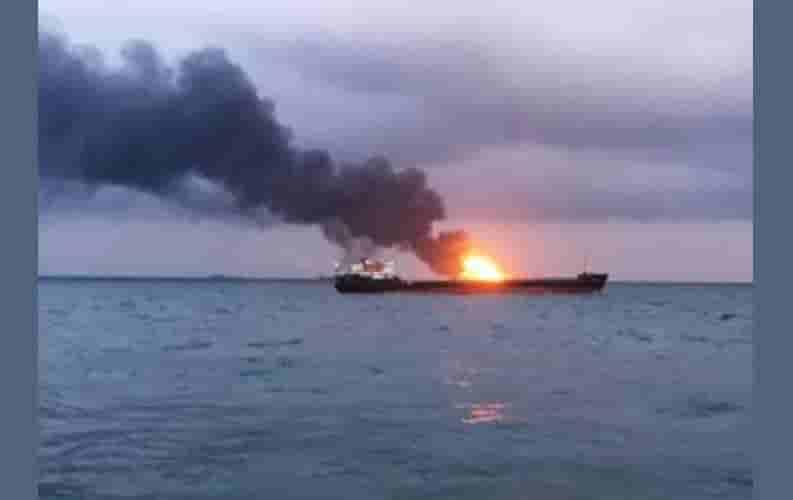
Chang pointed out that vessels are currently stalled on both the northern and southern ends of the strait, a route typically used for transporting discounted Iranian crude — particularly to China’s independent “teapot” refiners.
“This will go through the system, and I suspect you will see real problems in about two months in China if this situation continues,” he said.
The report further warned that insurance providers are pulling back coverage, LNG shipments are being disrupted, and tanker traffic is effectively frozen — developments that could trigger a sharp spike in global oil prices, with China likely to be among the hardest hit.
Kyle Bass, founder and CEO of Hayman Capital Management, was quoted as saying that about a third of the world’s seaborne crude passes through the Strait of Hormuz every day.
“Fifty per cent of China’s imports flow through that strait every day. And right now, things are not going through the strait. If 10 million barrels go missing or get delayed for a week, there's no telling where the front end can go,” Bass said.
With inputs from IANS



© Copyright
Reporter Post.All Rights Reserved |
Powered by: Aptilogic Software |
 |
Page rendered in 0.0117 seconds.
|
Page rendered in 0.0117 seconds.