Thu, October 22, 2026

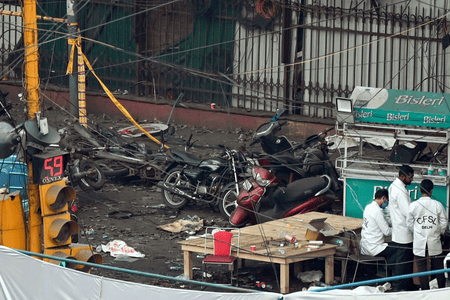
New Delhi: India’s security establishment is witnessing a noticeable shift in terror-related activity, with the recent Red Fort blast highlighting an increased push to build home-grown terror modules, according to Intelligence Bureau (IB) officials.
This evolving pattern has once again drawn attention to Indian Mujahideen (IM) co-founders Riyaz Bhatkal and Iqbal Bhatkal. After founding IM following the ban on the Students Islamic Movement of India (SIMI), both brothers fled to Pakistan, where they continue to live under the protection of Pakistan’s ISI.
Intelligence inputs now indicate that the Bhatkal brothers may soon be “re-activated” by the ISI. The plan, officials say, involves reviving the Indian Mujahideen under a new name—structured as a fully home-grown terror outfit with Indian operatives.
Despite major crackdowns in the past, several IM operatives remain underground, and the organisation still enjoys residual influence in multiple regions. This, officials believe, makes reviving its networks relatively easy.
Shift in ISI Strategy Post–Operation Sindoor
Following the collapse of IM after Yasin Bhatkal’s arrest, the ISI shifted focus to Jammu and Kashmir. But after Operation Sindoor, intelligence agencies say the ISI is once again turning its attention to the rest of India. Clear signals now point to a coordinated plan to revive IM—this time with help from the banned Popular Front of India (PFI).
Under the proposed structure, IM-linked cadres would focus on northern India, while PFI networks—stronger in the south—would support operations there.
Officials say collaboration between the two groups is not new. After SIMI was banned, several former members engaged with PFI leaders in Kerala, and it was during this period that IM took shape. PFI also reportedly sheltered IM operatives after major blasts and facilitated attacks in South India.
Given this history, intelligence agencies believe the ISI will face little difficulty bringing the two organisations back into alignment.
Bhatkal Brothers to Oversee New India-Focused Outfit
Sources say the ISI has tasked the Bhatkal brothers with orchestrating this new pan-India outfit from Pakistan. The failed Faridabad module—which was initially self-radicalised and formed without ISI assistance—had shown Pakistan the potential of a locally grown network rooted entirely in Indian operatives.
After the module was discovered to be ideologically aligned with Jaish-e-Mohammad, the ISI reportedly tried to co-opt it. But with that module dismantled, the ISI now aims to rebuild a similar structure under experienced handlers familiar with Indian terrain and networks.
Objective: Divert Security Focus from Kashmir
Security experts believe Pakistan’s larger strategy is to create an India-based terror group capable of launching attacks across the country. The goal, they say, is to stretch India’s security apparatus, forcing it to divert attention away from Jammu & Kashmir.
Such a shift, officials warn, would provide organisations like Lashkar-e-Taiba and Jaish-e-Mohammad breathing space to reorganise and plan large-scale operations in the Valley.
Pakistan, they add, has historically used unrest in Kashmir to distract its domestic audience from internal crises.
With the ISI expected to push aggressively for this revival, Indian security agencies say the situation demands high vigilance, coordinated intelligence, and proactive counter-terror measures.
With inputs from IANS



© Copyright
Reporter Post.All Rights Reserved |
Powered by: Aptilogic Software |
 |
Page rendered in 0.0105 seconds.
|
Page rendered in 0.0105 seconds.