
Tue, June 02, 2026

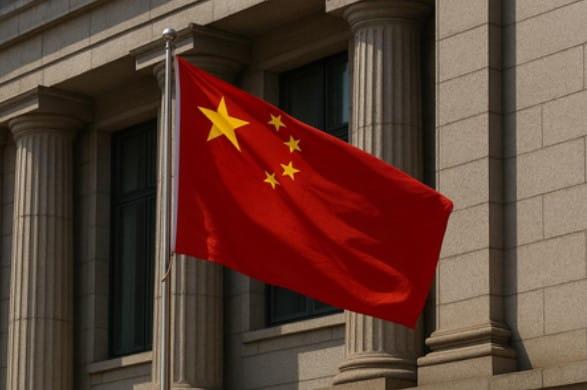
New Delhi: Kazakhstan’s growing reliance on Chinese financing has raised concerns among analysts about the possibility of the Central Asian nation slipping deeper into a debt dependency on China, according to a recent report.
The report notes that Kazakhstan's borrowing from China increased sharply over the past year. In 2025 alone, the country reportedly secured more than $3.5 billion in Chinese credit, pushing its total debt to China to approximately $12.87 billion. This marks a significant jump from the relatively stable debt levels recorded in previous years, which stood at around $9 billion between 2022 and 2024.
The latest figures suggest that Kazakhstan's financial exposure to China could continue to rise. In May 2026, the government launched yuan-denominated "panda bonds" in China's domestic bond market, raising 3.4 billion yuan (over $500 million). The bonds carry a three-year maturity period and an annual coupon rate of 1.9 percent.
Adding to Kazakhstan's borrowing capacity, a Chinese credit-rating agency recently awarded the country its highest sovereign rating of AAA with a stable outlook, potentially making future borrowing from Chinese institutions easier and more affordable.
The increased borrowing comes as President Kassym-Jomart Tokayev pursues an ambitious economic modernization strategy aimed at building a knowledge-based and digitally driven economy. Much of the newly acquired financing is expected to support technology, digital infrastructure, and innovation projects.
China has also expanded its educational and vocational footprint in Kazakhstan through the establishment of Luban Workshops, training centers designed to provide technical and vocational education. A second workshop recently opened in the capital city of Astana, while a third is expected later this year.
Observers view these initiatives as part of China's broader effort to strengthen its influence in Central Asia and improve public perceptions of its growing economic presence in the region.
However, not all aspects of the relationship have progressed smoothly. Tensions emerged recently following an investigation involving dozens of Chinese nationals employed at a metallurgical plant in the city of Shymkent. Authorities reportedly detained around 80 Chinese workers during an inquiry into alleged violations of work authorization requirements.
The incident also involved Chinese investors who had planned to invest roughly $30 million in the facility's expansion. Plant management later claimed that the investigation disrupted operations and caused significant financial losses.
While Kazakhstan continues to view China as a major source of investment and financing, the rapid increase in debt obligations is likely to fuel debate over whether the country can maintain economic independence while relying heavily on Chinese capital. Critics often use the term "debt trap" to describe such situations, although economists remain divided on how frequently Chinese lending actually results in long-term loss of sovereignty or strategic control.
With inputs from IANS




| 14-09-2018 | ||||||
| Sl No. | Parameters | Actual Data(µg/m3) | Standard Limit(µg/m3) |
|---|---|---|---|
| 1 | PM 10 | 64 | 100 |
| 2 | PM 2.5 | 33 | 60 |
| 3 | SO2 | 55.3 | 80 |
| 4 | NO2 | 58.2 | 80 |
| 14-09-2018 | ||||||
| Station | Temperature(degree centigrade) | Rainfall(mm) | Relative humidity(%) | |||
|---|---|---|---|---|---|---|
| Max | Min | Past 24 hrs. | Since 1st March, 2018 | Max | Min | |
| Ranchi | 31.0 | 22.5 | 000.0 | 1010.1 | 95 | 66 |
| Jamshedpur | 34.1 | 26.2 | 000.0 | 1252.8 | 87 | 58 |
| Bokaro | 33.5 | 24.6 | 015.2 | 824.0 | 92 | 79 |
| Daltonganj | 32.6 | 24.9 | 004.2 | 960.9 | 95 | 67 |
© Copyright
Reporter Post.All Rights Reserved |
Powered by: Aptilogic Software |
 |
Page rendered in 0.1061 seconds.
|
Page rendered in 0.1061 seconds.