Sun, October 11, 2026
Representational Pic
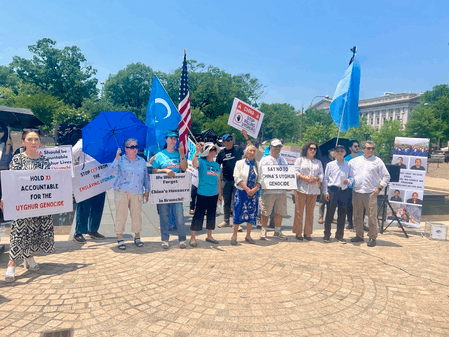
Amnesty International has called on the Chinese government to end what it described as a campaign of “systematic repression” against predominantly Muslim ethnic minorities in Xinjiang, including Uyghurs and Kazakhs.
In a report released on Monday, the human rights organisation alleged that Chinese authorities had intensified mass detentions, surveillance, political indoctrination and forced cultural assimilation in the Xinjiang Uyghur Autonomous Region over the previous year.
Amnesty estimated that nearly one million Muslims were being held in so-called re-education camps without access to a trial, lawyers or regular contact with their families.
The organisation alleged that authorities had treated a range of religious and cultural practices as signs of extremism. These reportedly included regular prayer, fasting, avoiding alcohol, wearing veils or headscarves, growing what officials considered an “abnormal” beard, and possessing books or other material related to Islam or Uyghur culture.
Nicholas Bequelin, Amnesty International's East Asia Director, described the facilities as places of political indoctrination and alleged torture and punishment. He said people could be detained for actions as ordinary as communicating with relatives abroad.
The Chinese government has defended its policies in Xinjiang as necessary measures to combat terrorism and extremism. Authorities have described the re-education programme as an effort to prevent radicalisation and promote social stability.
Amnesty, however, said former detainees had reported harsh treatment of people who resisted or failed to demonstrate what authorities considered sufficient political “transformation”. Alleged punishments included verbal abuse, food deprivation, solitary confinement and beatings.
The organisation also cited accounts of deaths inside detention facilities, including alleged suicides by detainees who were unable to endure the conditions.
One former detainee interviewed by Amnesty, Kairat Samarkan, said he was detained in October 2017 after travelling to Kazakhstan and was released in February 2018. According to Amnesty, Chinese authorities accused him of “betraying his country”.
Samarkan reportedly said he was hooded, shackled and forced to remain standing in one position for as long as 12 hours. He also described being held alongside thousands of other people and being required to sing political songs and study speeches by Chinese Communist Party leaders.
Amnesty said travel to foreign countries, particularly Muslim-majority nations, as well as communication with people outside China, had become potential grounds for suspicion among authorities.
The crackdown has also had a major impact on families, with many relatives separated from detainees for extended periods. Bequelin called on Chinese authorities to provide information about people held in the facilities and allow families to know what had happened to their relatives.
The allegations surrounding Xinjiang have drawn sustained international attention, with human rights organisations and several governments raising concerns about China's treatment of Muslim minorities. Beijing has repeatedly rejected accusations of widespread rights abuses and maintained that its policies are aimed at combating terrorism and preventing extremism.
China is home to an estimated 23 million Muslims, representing around 1.7 per cent of its population. The country's Muslim population includes the Hui and several Central Asian ethnic groups, including Uyghurs, Kazakhs, Uzbeks, Kyrgyz and Tajiks.
The Xinjiang issue has consequently become a major international human rights concern as well as a source of tension between China and governments and rights organisations abroad.



© Copyright
Reporter Post.All Rights Reserved |
Powered by: Aptilogic Software |
 |
Page rendered in 0.0102 seconds.
|
Page rendered in 0.0102 seconds.