Sun, October 11, 2026

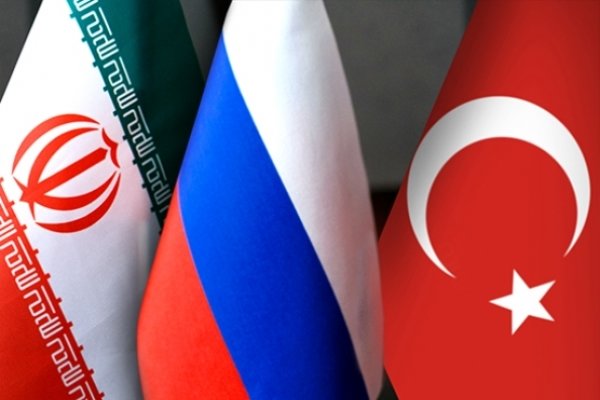
Representational Pic
Russia and Turkey have agreed to establish a demilitarized zone between Syrian government forces and armed opposition groups in Idlib province by October 15, Russian President Vladimir Putin said on Monday.
The agreement was reached during talks between Putin and Turkish President Recep Tayyip Erdogan in Sochi, as concerns mounted over a possible military offensive in Idlib, the last major stronghold of Syrian rebels.
Putin said the demilitarized zone would extend 15 to 20 km along the contact line separating government troops and opposition forces. Mobile patrols comprising Turkish military units and Russian military police would monitor the area and help maintain the arrangement, according to a Kremlin statement.
The two leaders also reaffirmed their commitment to combating terrorism in Syria and agreed to continue efforts to establish a constitutional committee involving representatives of the Syrian government, opposition groups and civil society.
Erdogan said armed opposition groups would remain in the areas under their control but stressed that Turkey and Russia would work to remove radical groups from those territories. The arrangement is aimed at preventing a large-scale military confrontation while addressing security concerns linked to extremist organisations operating in the region.
Russian Defence Minister Sergei Shoigu said there would be no military operation against the armed opposition in Idlib under the agreement. He added that the Russian military would soon begin coordinating with Syrian government forces on implementing the new arrangement.
The agreement came at a critical time for Idlib. Syrian government forces, backed by Russia and Iran, had been preparing for a major offensive against rebel groups in the province. Turkey and the United States had repeatedly warned that such an operation could result in large civilian casualties and trigger a humanitarian crisis.
Idlib borders Turkey and is home to millions of civilians, including large numbers of people displaced from other parts of Syria during the country's prolonged conflict. Ankara has therefore been particularly concerned that a major offensive could send another wave of refugees towards its border.
Turkey had earlier called for a ceasefire in Idlib during a trilateral summit in Tehran on September 7, but the proposal was not accepted by Russia and Iran at the time.
The Russia-Turkey agreement represents an attempt to prevent an immediate escalation in Idlib while creating a mechanism to separate moderate opposition forces from extremist groups. Its implementation, however, would depend heavily on the ability of Moscow and Ankara to ensure that the agreed demilitarized zone is respected by the various armed groups operating in the province.



© Copyright
Reporter Post.All Rights Reserved |
Powered by: Aptilogic Software |
 |
Page rendered in 0.0208 seconds.
|
Page rendered in 0.0208 seconds.