Tue, October 27, 2026

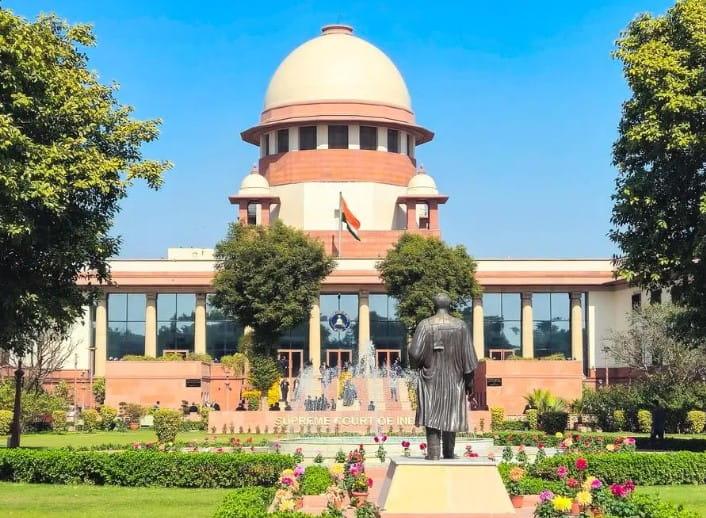
The Supreme Court on Monday sought responses from the Centre, the Election Commission of India (ECI) and its three Election Commissioners on a plea challenging the manner in which the poll panel’s powers are being exercised and questioning whether Chief Election Commissioner (CEC) Gyanesh Kumar can individually exercise or represent powers vested in the multi-member Commission.
A bench headed by Chief Justice of India Surya Kant and comprising Justices Joymalya Bagchi and V. Mohana issued notices after senior advocate Vikas Singh, appearing for the petitioner, alleged that the credibility of the ECI had been undermined and that the CEC was acting contrary to the statutory framework governing the poll body.
Singh sought interim measures, arguing that the functioning of the ECI had raised concerns among citizens. The bench, however, said it would first require authenticated information regarding the allegations and hear the response of the poll panel.
“Let’s first have authenticated information on that. We can always annul any decision,” the Supreme Court observed.
The petitioner also urged the court to direct that, until the next hearing, decisions of the ECI be taken unanimously. The bench observed that the Commissioners are expected to deliberate collectively and that, in the event of a lack of unanimity, a decision is required to be taken by majority.
The court further noted that the petitioner had relied on a news report and said it wanted to hear the ECI’s response before examining the allegations. “News reports may be fully or partially correct. We will like their response,” the bench said.
According to the Supreme Court’s case status, the matter is tentatively listed for hearing on October 26.
The petition seeks enforcement of the collective decision-making framework governing the ECI and questions the authority under which the CEC has reportedly acted in the name of the poll panel. It contends that Article 324 of the Constitution vests the superintendence, direction and control of elections in the “Commission” rather than an individual CEC. It also relies on Section 18 of the Chief Election Commissioner and Other Election Commissioners (Appointment, Conditions of Service and Term of Office) Act, 2023, which provides for collective decision-making.
The petition cites written communications and file notings attributed to Election Commissioners Sukhbir Singh Sandhu and Vivek Joshi, who allegedly raised objections between October 2025 and August 2026 over decisions and steps reportedly taken in the name of the ECI without their approval.
The alleged objections relate to communications and orders, meeting procedures, foreign travel, changes to Form 6, access to electoral roll databases and appeals before tribunals in West Bengal. The petition also refers to concerns over the alleged “gradual centralisation of the electoral roll database” and changes in the work allocation of the ECI’s IT establishment.
The petitioner has sought directions to ensure that powers vested in the ECI under Article 324 are exercised strictly in accordance with the constitutional and statutory framework. It has also sought preservation and production of relevant records concerning the disputed decisions.
The ECI, meanwhile, has maintained that differences among Commissioners do not amount to an institutional “rupture”. The poll panel has said internal objections and written notes are part of the normal deliberative and administrative process in a multi-member constitutional body. It has also maintained that its decisions, including those relating to the Special Intensive Revision (SIR) exercise, were unanimous.



© Copyright
Reporter Post.All Rights Reserved |
Powered by: Aptilogic Software |
 |
Page rendered in 0.0085 seconds.
|
Page rendered in 0.0085 seconds.