Mon, October 05, 2026

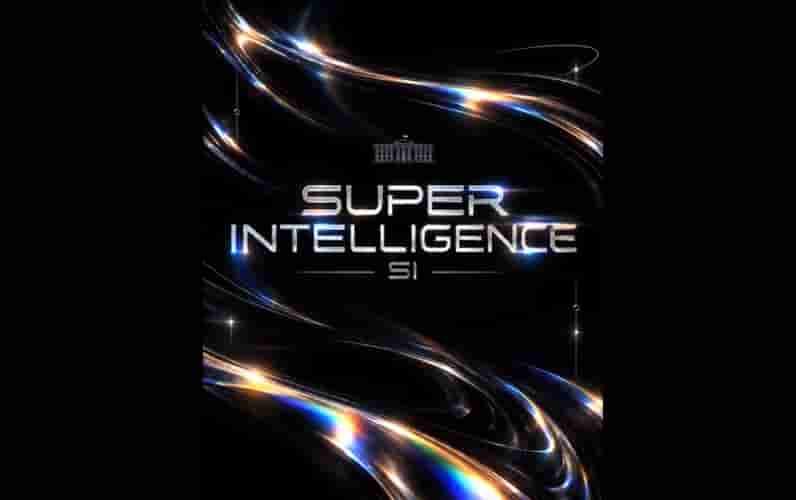
Photo: IANS
The United States and 16 other countries have endorsed a new international initiative aimed at using "Super Intelligence" (SI) to accelerate scientific discovery, expand researchers' access to advanced computing and explore new approaches to funding and organising research.
The Kyoto Vision for a Golden Age of Science was endorsed at the 23rd annual meeting of the Science and Technology in Society Forum in Kyoto, Japan, the White House said on Sunday.
India is notably absent from the list of countries that endorsed the declaration.
The initiative was led by Michael Kratsios, Director of the White House Office of Science and Technology Policy, as the Trump administration seeks to reshape the US research ecosystem around artificial intelligence, advanced computing and alternative models for conducting and financing scientific research.
The White House said the declaration reflects the growing potential of SI to accelerate scientific discovery and enable autonomous experimentation on a scale that would not be possible through conventional research methods.
"The way we make scientific discoveries has changed, and the Kyoto Vision is a recognition of that shift and a call to action," Kratsios said.
He described the application of SI to scientific research as a potentially transformative force and said the United States, under President Donald Trump, was seeking to lead the transition towards new models of discovery.
The declaration is built around three broad priorities: transforming institutions involved in scientific research, harnessing SI for discovery and developing the next generation of scientific talent.
Under the institutional reforms proposed in the declaration, participating countries backed a wider range of research funding mechanisms, including long-duration grants, rapid awards, prizes and challenge-based funding.
They also supported experimentation with research institutions offering scientists different levels of autonomy, resources and strategic direction.
The participating nations endorsed "metascience" — the empirical study of how scientific research is conducted, organised and funded — as a means of improving the effectiveness and public value of scientific research.
On SI, the declaration notes that advanced AI systems are already accelerating conventional research tasks while also opening up new avenues for scientific inquiry. The countries pledged to improve researchers' access to SI tools, scientific datasets, computing infrastructure and experimental facilities, while encouraging their integration into everyday research workflows.
The third pillar focuses on strengthening the scientific workforce, particularly students and researchers at the early stages of their careers.
The participating countries committed to identifying and supporting talented students and early-career researchers, while providing them with greater freedom to pursue ambitious research programmes.
They also called for increased hands-on training, cross-sector doctoral programmes, fellowships and research partnerships, particularly in areas requiring specialists capable of operating, developing and improving sophisticated scientific equipment.
The countries endorsing the declaration, besides the US, are Argentina, Bulgaria, Chile, Cyprus, Germany, Greece, Indonesia, Italy, Japan, Kazakhstan, South Korea, New Zealand, Poland, Singapore, the United Arab Emirates and the United Kingdom.
The Kyoto initiative follows a report Kratsios submitted to President Trump in July titled "Science: A New Golden Age".
The White House described the report as the most comprehensive reassessment of the US science and technology research system in eight decades. It proposed new directions for federal agencies in conducting, funding and evaluating research and development, taking into account rapid changes in artificial intelligence, computing and other emerging technologies.
The Kyoto declaration signals a broader international debate over how AI and increasingly autonomous scientific systems could change the traditional research model — from how discoveries are funded and conducted to how scientists, institutions and computing resources are organised.



© Copyright
Reporter Post.All Rights Reserved |
Powered by: Aptilogic Software |
 |
Page rendered in 0.0128 seconds.
|
Page rendered in 0.0128 seconds.