Sun, September 27, 2026
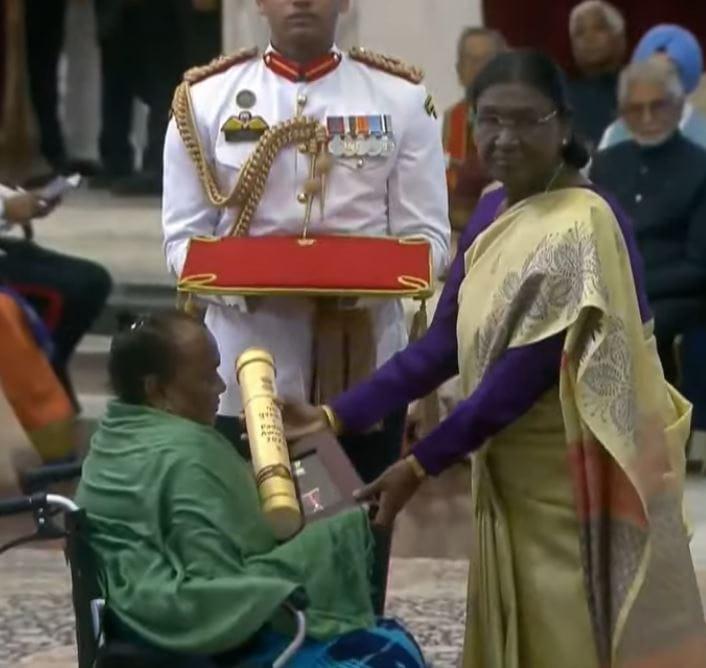
Ranchi: An emotional chapter in Jharkhand's history unfolded at Rashtrapati Bhavan on Tuesday as the late tribal leader and Jharkhand movement icon Shibu Soren was posthumously honoured with the Padma Bhushan, one of India's highest civilian awards. The honour was received by his wife, Rupi Soren, from President Droupadi Murmu in the presence of family members, dignitaries and guests.
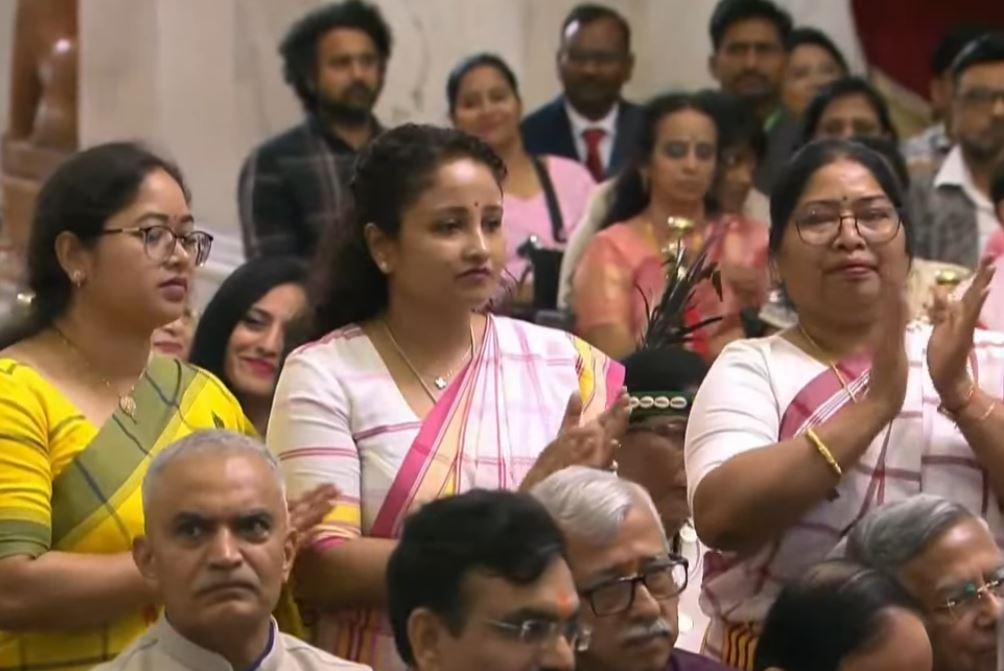
As Shibu Soren's name was announced during the ceremony, the hall fell silent in a moment of respect for the veteran leader who devoted his life to protecting the rights of tribal communities and championing the cause of 'Jal, Jungle, Zameen' (water, forests and land). His daughter-in-law, Kalpana Soren, also witnessed the historic occasion.
The Centre had announced the Padma Bhushan for Shibu Soren on January 25 this year in recognition of his outstanding contribution to public affairs. The formal presentation of the award marked a fitting tribute to a leader whose political and social legacy continues to shape Jharkhand.
Born on January 11, 1944, in Nemra village of present-day Ramgarh district, Shibu Soren's life was transformed by tragedy at an early age. His father, Sobaran Soren, was killed after raising his voice against moneylenders who exploited tribal communities. The incident left a lasting impact on the young Soren, inspiring him to dedicate his life to fighting injustice and protecting the rights of the poor and marginalised.
He launched a grassroots movement against exploitation, illegal occupation of tribal land and the oppressive moneylending system. Travelling from village to village, he mobilised tribal communities and helped many families reclaim their land. His growing influence among the people earned him the title 'Dishom Guru', meaning 'Teacher of the Nation', particularly across the Santhal Pargana region.
During the 1970s, Shibu Soren founded the Jharkhand Mukti Morcha (JMM), turning the demand for a separate Jharkhand state into a powerful mass movement. Under his leadership, the struggle for statehood gained momentum and eventually culminated in the creation of Jharkhand in 2000. His efforts are widely regarded as one of the defining forces behind the formation of the state.
Even after Jharkhand was carved out of Bihar, Shibu Soren remained committed to the welfare of tribal communities, farmers, labourers and the underprivileged. Over a political career spanning more than four decades, he served in several key roles, including Chief Minister of Jharkhand, Member of Parliament and Union Coal Minister.
He was elected to the Lok Sabha from Dumka eight times, reflecting his deep connect with the people. Although his three terms as Chief Minister in 2005, 2008 and 2009-10 were relatively short due to coalition politics, he consistently focused on policies aimed at improving the lives of the poor and protecting tribal interests.
Shibu Soren passed away in 2025 at the age of 81, leaving behind a legacy that continues to inspire generations. The posthumous Padma Bhushan stands as a national recognition of his lifelong contribution to social justice, tribal empowerment and the movement that gave Jharkhand its identity.
For many in Jharkhand, the honour is not only a tribute to a political leader but also an acknowledgement of decades of struggle for the rights, dignity and identity of the state's tribal communities.



© Copyright
Reporter Post.All Rights Reserved |
Powered by: Aptilogic Software |
 |
Page rendered in 0.0076 seconds.
|
Page rendered in 0.0076 seconds.