Sun, September 27, 2026
Ranchi: Most people are familiar with the Surf Excel slogan, *"Daag Achhe Hain" (Stains are Good).* In the aftermath of the Rajya Sabha election results in Jharkhand, the slogan seems to have acquired a political meaning.
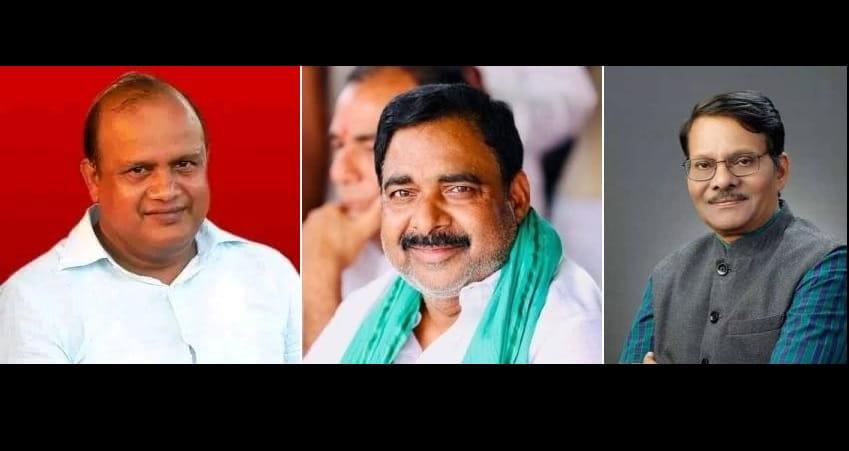
The bitter exchange between the Congress, the Rashtriya Janata Dal (RJD), and the CPI(ML)—all constituents of the INDIA alliance—created the impression of a coalition on the verge of collapse. Congress leaders labelled the RJD a "betrayer" and even demanded its removal from the government. In response, the RJD questioned Congress' political credibility and urged Chief Minister Hemant Soren to remove Congress from the coalition. CPI(ML) went a step further by writing a detailed letter to the Chief Minister, openly criticising Congress and questioning its conduct.
However, beyond the heated rhetoric lies a different political reality. The victory of BJP-backed Independent candidate Parimal Nathwani, despite lacking the required numbers on paper, has once again raised uncomfortable questions about cross-voting and political loyalty within the ruling alliance. While only the INDIA alliance can officially determine who was responsible for the unexpected outcome, the public mudslinging among its partners has further dented Jharkhand's political image.
Interestingly, the sharp confrontation that dominated headlines for two days appears to have subsided almost as quickly as it began. Leaders who were publicly accusing one another are now seemingly focused on preserving the coalition government. The message appears to be that, despite the political "stains," retaining power remains the overriding priority.
Yet the public continues to seek answers. Who engineered the political manoeuvring? What role did the reported hotel politics play? What actually happened behind closed doors? These questions remain unanswered.
Chief Minister Hemant Soren and his wife Kalpana Soren are currently outside the state. In their absence, coalition partners have engaged in a public war of words that resembles the traditional exchange of taunts once common during wedding ceremonies. Those who participated in the Rajya Sabha election are now silent spectators as political accusations continue to fly.
The larger question is whether the Rajya Sabha election result will have any lasting impact on Jharkhand's political landscape.
## Congress Under Scrutiny
The election outcome has also placed the Congress organisation, its leadership, and its internal functioning under intense scrutiny.
Rather than simply being a contest for two Rajya Sabha seats, the election has exposed possible fault lines within the ruling alliance. Congress candidate Pranav Jha's weaker-than-expected performance and the support received by Independent candidate Parimal Nathwani have sparked widespread political debate.
Before the election, Congress leaders projected confidence about securing victory. However, the final result contradicted those expectations. Despite the alliance having the required numerical strength, the party was unable to ensure the anticipated level of support for its own candidate. This naturally raises questions about whether Congress has been able to maintain confidence among its allies and legislators.
One of the key questions remains: Why did the Congress candidate receive fewer votes than expected? If the alliance was united, the party leadership must explain the discrepancy. So far, no convincing public explanation has emerged, strengthening the perception that the problem may lie within Congress itself rather than with its allies.
Congress leaders also came under criticism for immediately blaming coalition partners after the results were declared. Without publicly presenting evidence, holding allies responsible has been viewed by many as an attempt to divert attention from internal shortcomings. Both the RJD and CPI(ML) have rejected the allegations and instead questioned Congress' own leadership and organisational management.
Before attributing responsibility elsewhere, Congress may need to undertake a serious assessment of its own organisational structure. Electoral setbacks cannot always be explained by external factors alone. The Rajya Sabha election has highlighted concerns over coordination, discipline, and internal cohesion within the party.
If these organisational issues are not addressed, they could influence not only Congress' future electoral prospects but also the long-term stability of the ruling alliance in Jharkhand.
Ultimately, this election was about far more than two Rajya Sabha seats. It served as a test of the alliance's internal cohesion. Whether Congress chooses introspection or continues to place responsibility on its partners may well determine the future course of politics in Jharkhand.
By Gyan Ranjan


© Copyright
Reporter Post.All Rights Reserved |
Powered by: Aptilogic Software |
 |
Page rendered in 0.011 seconds.
|
Page rendered in 0.011 seconds.