Sun, September 27, 2026

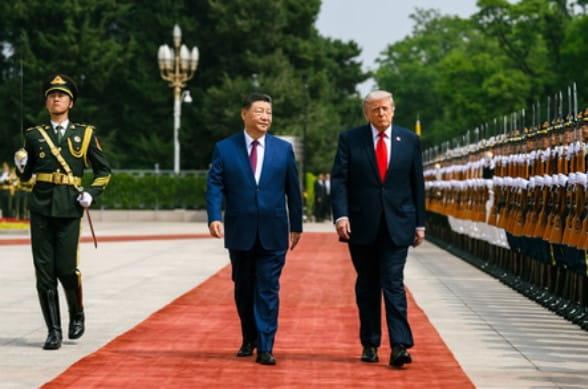
Washington- The much-anticipated summit between US President Donald Trump and Chinese President Xi Jinping offered strong symbolic messaging and temporarily eased tensions, but fell short of producing major breakthroughs on core issues dividing the two powers, according to experts at the Council on Foreign Relations (CFR).
Speaking during a media briefing on Friday, CFR specialists said the Beijing meeting helped maintain a fragile stability after last year’s bitter trade confrontation, but left unresolved disputes over Taiwan, technology restrictions, tariffs, rare earth minerals and Iran.
“This summit carried more symbolism than substance,” said Rush Doshi, who described China’s main objective as preserving a temporary détente with Washington.
According to Doshi, Beijing is seeking time and stability to strengthen its long-term strategic position, and the summit largely achieved that goal.
One of the biggest concerns surrounding the talks was China’s overwhelming control over rare earth minerals and global supply chains critical for advanced industries.
Heidi Crebo-Rediker warned that China’s export restrictions on rare earths and magnets last year exposed deep vulnerabilities in US and European manufacturing and defence sectors.
She said Beijing now holds significant leverage over global advanced economies, particularly in sectors linked to defence systems, semiconductors and electric vehicles.
Crebo-Rediker added that Western countries remain years away from building resilient alternative supply chains and accused China of undercutting emerging competitors through aggressive pricing strategies.
On the economic front, Zongyuan Zoe Liu said the summit reduced the likelihood of immediate escalation but did not address the structural mistrust at the heart of US-China economic relations.
“The relationship may be stabilising temporarily, but it is not being repaired,” she noted.
Liu also questioned reports suggesting China would significantly increase purchases of American products such as soybeans and Boeing aircraft, pointing to the unfulfilled commitments under the earlier Phase One trade agreement.
Taiwan remained among the most sensitive topics discussed during the summit.
David Sacks said Beijing had strongly pushed Washington to reconsider elements of its longstanding Taiwan policy ahead of the meeting.
He added that Taiwan viewed the summit primarily as an attempt to contain risks and prevent further deterioration in cross-strait tensions.
Sacks also highlighted fresh uncertainty after Trump reportedly suggested aboard Air Force One that he could speak with Taiwanese President William Lai regarding arms sales.
He noted that no sitting US president has directly spoken with a Taiwanese president since Washington shifted diplomatic recognition from Taipei to Beijing in 1979.
Technology and artificial intelligence were also key parts of the discussions.
Chris McGuire said potential US sales of advanced AI chips to China could dramatically increase Beijing’s computing capabilities.
He estimated such sales could potentially triple China’s AI computing capacity, even as Chinese firms continue working to develop domestic alternatives.
The summit took place amid growing global concern over intensifying US-China rivalry across trade, military influence, technology and the broader Indo-Pacific region.
With inputs from IANS



© Copyright
Reporter Post.All Rights Reserved |
Powered by: Aptilogic Software |
 |
Page rendered in 0.0077 seconds.
|
Page rendered in 0.0077 seconds.