Mon, September 07, 2026
New Delhi — As tensions in the Middle East disrupt oil supplies and push global prices upward, countries across South Asia are increasingly looking toward India rather than China for immediate energy support. This trend is highlighted in a recent analysis by the Organisation for Research on China and Asia (OCRA).
For economies in the region that already operate with limited financial buffers, prolonged supply disruptions could mean persistent inflation and growing fiscal stress. In such a fragile environment, the ability of larger regional powers to respond quickly becomes crucial.
According to the article by Ophelia Yumlembam, the way India and China choose to act—whether by stepping up assistance or pulling back—will significantly influence long-term regional alignments. For smaller South Asian nations, the stakes are immediate. Heavy reliance on Gulf energy imports leaves them highly exposed, making timely and dependable support a top priority.
Despite China’s strong presence in the region through infrastructure investments, many countries have consistently turned to India in moments of crisis. This isn’t accidental—it reflects a pattern where India is seen as a dependable first responder. Such trust, the report suggests, could translate into deeper strategic influence over time.
Over the past decade, both India and China have expanded their energy engagement in South Asia, though in very different ways. China has focused on large-scale infrastructure projects under its Belt and Road Initiative, including ports, pipelines, and refineries. A notable example is the $3.7 billion investment in a major oil refinery project in Hambantota, Sri Lanka.
India, on the other hand, has taken a more practical and less capital-intensive approach. Its projects emphasize functionality and quick deployment. For instance, a cross-border pipeline now transports diesel from Assam’s Numaligarh refinery to Bangladesh’s Parbatipur. Similarly, agreements with Nepal have strengthened petroleum infrastructure and enabled faster supply mobilisation during emergencies.
Recent developments further reinforce this pattern. In Sri Lanka’s latest fuel shortage, India stepped in with urgent assistance in March, while Colombo approached China only later. Even in the Maldives—despite its recent political tilt toward Beijing under Mohamed Muizzu—the government sought immediate fuel support from India instead of China.
These cases underline a broader reality: in times of crisis, responsiveness matters more than long-term economic or political ties.
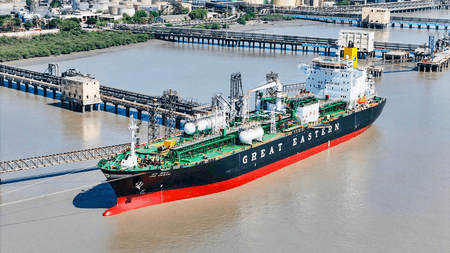
India, despite dealing with its own energy challenges, has actively positioned itself as a regional stabiliser. Since March, it has supplied tens of thousands of metric tonnes of petroleum products—including crude oil, LPG, LNG, petrol, and diesel—to neighbouring countries. Sri Lanka alone received 38,000 metric tonnes, while Bangladesh got 22,000 metric tonnes through the Friendship Pipeline. Requests from Nepal and the Maldives are also under consideration.
This strategy, often referred to as “energy diplomacy,” goes beyond short-term relief. It reflects India’s deliberate use of its energy capacity to strengthen regional influence and build long-term partnerships in South Asia.
With inputs from IANS


© Copyright
Reporter Post.All Rights Reserved |
Powered by: Aptilogic Software |
 |
Page rendered in 0.0839 seconds.
|
Page rendered in 0.0839 seconds.