Mon, September 07, 2026

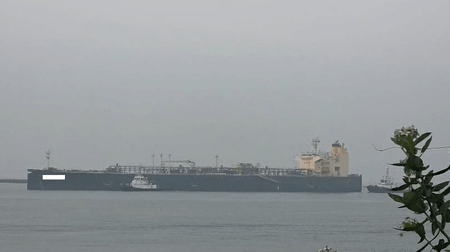
Washington: The United States Department of the Treasury has extended a key waiver allowing the delivery and sale of already-loaded Russian oil shipments, pushing the deadline to May 16.
The earlier 30-day waiver had expired on April 11. The renewed license permits transactions related to Russian crude and petroleum products that were loaded onto vessels before April 17, offering temporary relief to global energy markets.
This move is part of Washington’s broader effort to stabilise oil prices, which have remained volatile due to ongoing geopolitical tensions involving the US, Israel, and Iran. Several countries have been grappling with rising energy costs and supply uncertainties, making such interim measures crucial.
However, the waiver comes with strict conditions. It does not allow any transactions involving entities or individuals linked to Iran, North Korea, Cuba, or certain regions of Ukraine under US sanctions frameworks.
The extension follows recent remarks by Scott Bessent, who indicated that such waivers are not a long-term strategy. He emphasised that the US does not intend to continue these relaxations indefinitely, especially as geopolitical tensions escalate.
Meanwhile, global oil prices saw a sharp drop of nearly 9 per cent, settling close to $90 per barrel after Iran temporarily reopened the Strait of Hormuz—a critical artery for global energy supplies. The easing of concerns around supply disruptions contributed to the decline.
Despite this, the broader conflict continues to weigh heavily on the energy market. The International Energy Agency has described the current situation as one of the most severe disruptions to global energy supplies in history, with over 80 oil and gas facilities reportedly damaged across West Asia.
Iran has also warned that it could shut the Strait of Hormuz again if US naval actions near its ports continue, keeping markets on edge.
Reacting to the extension, Kirill Dmitriev suggested that US–Russia energy cooperation may persist in some form. He had earlier stated that the initial waiver could release up to 100 million barrels of crude oil—roughly equivalent to nearly a day’s global output.
While the waiver provides short-term breathing room, its temporary nature means global markets will continue to closely monitor geopolitical developments and policy signals from Washington.
With inputs from IANS



© Copyright
Reporter Post.All Rights Reserved |
Powered by: Aptilogic Software |
 |
Page rendered in 0.0318 seconds.
|
Page rendered in 0.0318 seconds.