Tue, September 08, 2026

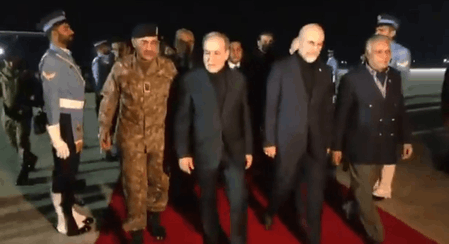
Islamabad — The format of upcoming talks between the United States and Iran remains uncertain, with multiple arrangements under consideration, according to a source familiar with the developments.
Speaking to Xinhua, the source said preparations include both direct, face-to-face negotiations and indirect talks conducted in separate rooms. Pakistan has readied itself for either scenario, offering to facilitate direct dialogue or act as an intermediary by relaying messages between the two delegations.
Reports from Al Jazeera suggest that while both delegations may stay at the same hotel in Islamabad, they are unlikely to meet directly. Instead, Pakistani officials are expected to shuttle messages between the two sides.
Earlier, Pakistan’s Deputy Prime Minister and Foreign Minister Ishaq Dar stated that Islamabad’s role is limited to bringing both sides to the table, without influencing the outcome of discussions.
According to The Washington Post, the two countries currently share little common ground beyond a mutual need to de-escalate tensions. Ahead of the talks, both sides have accused each other of acting in bad faith.
US President Donald Trump criticized Iran’s proposals as insincere and accused Tehran of restricting tanker movement through the Strait of Hormuz. On the other hand, Iran has laid down firm preconditions. Reports from The New York Times indicate that Iranian Parliamentary Speaker Mohammad Bagher Ghalibaf has demanded the release of blocked assets before formal negotiations can begin.
Meanwhile, US Vice President J. D. Vance, who is leading the American delegation, struck a more conciliatory tone, expressing hope for positive outcomes if Iran engages constructively.
The talks are taking place against a backdrop of continued regional instability. Although a ceasefire is technically in place, ongoing Israeli military operations in Lebanon continue to complicate diplomatic efforts, making the path to resolution more challenging.
WIth inputs from IANS



© Copyright
Reporter Post.All Rights Reserved |
Powered by: Aptilogic Software |
 |
Page rendered in 0.0266 seconds.
|
Page rendered in 0.0266 seconds.