Tue, September 08, 2026

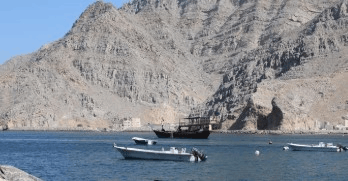
Washington: A new complication has emerged in the already fragile geopolitical situation, as Iran struggles to fully reopen the strategically vital Strait of Hormuz due to missing sea mines reportedly deployed during recent hostilities.
According to a report by The New York Times, citing US officials, Iran is currently unable to account for all the mines it laid in the narrow shipping corridor. This has raised serious concerns about maritime safety and the stability of global oil supply chains.
The Strait of Hormuz—connecting the Persian Gulf with the Gulf of Oman and the Arabian Sea—is one of the most critical energy transit chokepoints in the world. Nearly 20% of global oil shipments pass through this route, making any disruption a matter of international concern. For countries like India, the stakes are even higher due to heavy reliance on energy imports through this channel.
Reports suggest that Iran deployed the mines using small boats following joint airstrikes by the US and Israel amid escalating tensions over its nuclear programme. However, the operation appears to have lacked proper documentation. Some mines were either not recorded or were laid in ways that allowed them to drift, significantly complicating detection and removal.
US officials have reportedly described the mining effort as “haphazard,” underlining the potential danger to commercial vessels navigating the area.
The situation is also impacting diplomatic efforts, including ongoing talks between Washington and Tehran. The Islamic Revolutionary Guard Corps (IRGC) has issued warnings to ships, advising them to avoid certain routes due to the risk of mine collisions. It has also indicated that alternative passages may be used under controlled conditions.
Although Iran agreed to reopen the strait following a ceasefire with the US—announced ahead of a deadline set by Donald Trump—the inability to quickly clear the mines has delayed the return to normal shipping operations.
For now, authorities are recommending alternate navigation routes to minimize risk, but the uncertainty continues to weigh on global trade and energy markets.
With inputs from IANS



© Copyright
Reporter Post.All Rights Reserved |
Powered by: Aptilogic Software |
 |
Page rendered in 0.0243 seconds.
|
Page rendered in 0.0243 seconds.