Sun, September 27, 2026

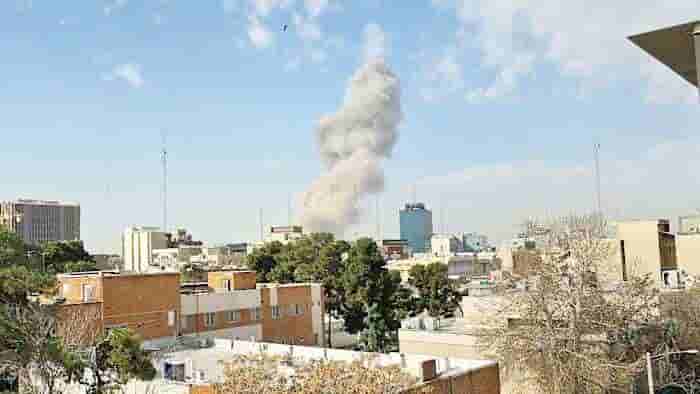
Tel Aviv (RPS): Feb 28 : The United States joined forces with the Israel to carry out coordinated military strikes on targets inside the Iran, with multiple explosions reported in the Iranian capital, Tehran, on Saturday.
Officials in Washington and Jerusalem described the operation as a pre-emptive move aimed at neutralising what they called imminent threats linked to Iran’s nuclear and ballistic missile infrastructure. The joint action marks one of the most direct and significant military collaborations between the two allies against Iran in recent years.
Following the strikes, Israel declared a nationwide state of emergency and shut down its airspace to civilian and commercial flights, anticipating swift retaliation from Tehran. Sirens sounded across major Israeli cities as authorities instructed residents to remain close to shelters.
The closure of Israeli skies halted flights at key airports and disrupted international travel, signalling the seriousness with which Israeli authorities are preparing for potential counter-attacks involving missiles or drones.
In Tehran, state media confirmed explosions in parts of the city, including areas considered strategically sensitive. While official casualty figures were not immediately released, security forces were deployed across the capital, and airspace restrictions were also reported within Iran.
Iran Vows to Retaliate
Iran’s leadership responded with strong condemnation, labelling the strikes an act of aggression. Senior officials vowed that Tehran would deliver a “decisive and proportionate” response. Advisers close to Iran’s top leadership warned that any attack involving U.S. forces would widen the scope of retaliation.
Iran maintains that its nuclear programme is intended for peaceful purposes, a claim long disputed by Israel and the United States. Tehran has previously warned that foreign military intervention would trigger direct and indirect responses targeting regional interests and allied assets.
Rising Regional Tensions
The joint U.S.–Israel strikes come after months of stalled diplomatic negotiations over Iran’s nuclear activities. Talks aimed at limiting uranium enrichment and strengthening inspections had failed to produce a breakthrough, even as Washington increased military deployments in the region.
Global markets reacted swiftly to the news, with oil prices climbing amid fears of broader instability in the Gulf. Several Western governments issued travel advisories, and diplomatic missions reviewed security protocols.
As Iran prepares its response and Israel remains on high alert with its airspace closed, the region stands at a critical juncture. Whether this confrontation remains limited or expands into a wider conflict may depend on the scale and timing of Tehran’s promised retaliation.



© Copyright
Reporter Post.All Rights Reserved |
Powered by: Aptilogic Software |
 |
Page rendered in 0.0106 seconds.
|
Page rendered in 0.0106 seconds.