Mon, September 28, 2026

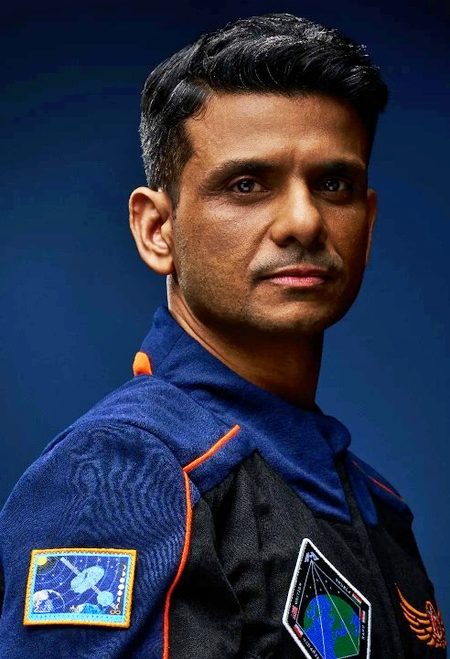
New Delhi: Indian astronaut Shubhanshu Shukla’s much-anticipated journey to the International Space Station (ISS) has been postponed once again due to unfavorable weather conditions, the Indian Space Research Organisation (ISRO) announced on Monday.
The mission, organized by US-based Axiom Space, is now set to launch Shukla along with three other crew members from Kennedy Space Center in Florida aboard a SpaceX Falcon 9 rocket on June 11 at 8 a.m. ET (5:30 p.m. IST).
Originally scheduled for May 29, the launch was first delayed to June 8, then to June 10, and now to June 11.
“Due to weather conditions, the launch of the Axiom-4 mission carrying the Indian Gaganyatri to the International Space Station has been postponed from June 10 to June 11, 2025,” Dr. V. Narayanan, ISRO Chairman, stated in a social media post on platform X.
SpaceX, the mission’s launch partner, added, “We are now targeting no earlier than Wednesday, June 11, for the Falcon 9 launch of Axiom Space’s Ax-4 mission to the Space Station due to high winds in the ascent corridor.”
A backup launch opportunity has been scheduled for June 12 at 7:37 a.m. ET.
If successful, Shukla will become the first Indian to visit the ISS and the second Indian to travel to space after Rakesh Sharma’s 1984 mission to space station Salyut 7.
Earlier on Monday, Shukla’s family expressed “immense pride” in his achievement. “We are definitely feeling proud; our son has done something that itself is a matter of pride,” Shukla’s mother told IANS from Lucknow.
Shukla will serve as pilot on the mission alongside Commander Peggy Whitson of the US. The other crew members include mission specialists Slawosz Uznanski-Wisniewski from Poland and Tibor Kapu from Hungary.
Once aboard the ISS, IAF Group Captain Shukla is expected to conduct exclusive food and nutrition experiments.
These experiments, developed through collaboration between ISRO and India’s Department of Biotechnology (DBT), with support from NASA, aim to advance space nutrition research and develop self-sustaining life support systems crucial for future long-term space missions.
The study will explore how microgravity and space radiation affect edible microalgae, a promising nutrient-rich food source.
It will focus on growth characteristics and molecular changes—transcriptomes, proteomes, and metabolomes—of various algal species in space compared to Earth conditions.
With inputs from IANS



© Copyright
Reporter Post.All Rights Reserved |
Powered by: Aptilogic Software |
 |
Page rendered in 0.0088 seconds.
|
Page rendered in 0.0088 seconds.