Tue, October 06, 2026

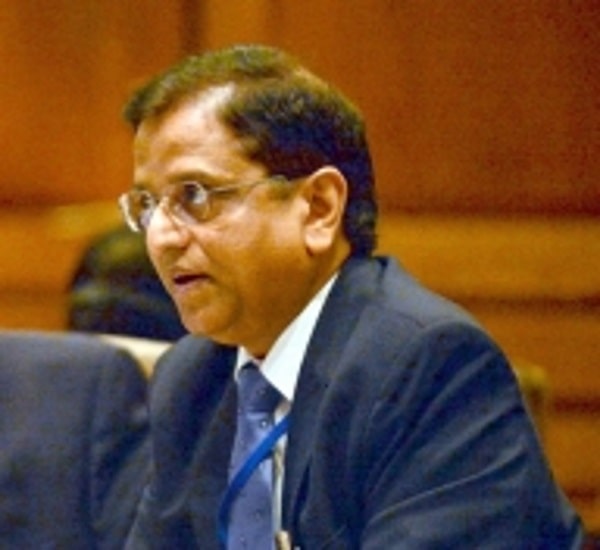
photo by ians
The World Bank Group (WBG) on Friday approved its largest-ever country programme for India, with financial assistance of up to $30 billion expected by the end of fiscal 2021-22 to support the country's transition towards higher middle-income status.
The WBG Board endorsed a new Country Partnership Framework (CPF) aimed at helping India address key development challenges, including creating jobs, improving human capital and ensuring more resource-efficient and inclusive economic growth.
Under the new framework, the World Bank Group expects to provide between $25 billion and $30 billion in assistance during the programme period ending in FY 2022.
“With a fast growing economy, global stature, and its unique experience of lifting the highest number of poor out of poverty in the past decades, India is well-positioned to become a high middle-income country by 2030,” said Hartwig Schafer, World Bank Vice President for South Asia.
The programme comes at a time when India was seeking to sustain rapid economic growth while addressing challenges related to employment, infrastructure, education, healthcare and environmental sustainability.
The World Bank said its support would focus on promoting more efficient use of resources, particularly land and water, while improving India's competitiveness and supporting job creation.
Human capital development will be another major priority, with investments planned in health, education and skills. The framework also identifies several emerging challenges, including air pollution, increasing employment opportunities for women, strengthening the resilience of the financial sector and improving development outcomes during the early years of childhood.
The programme will also encourage the use of new technologies across different sectors to improve the delivery and effectiveness of development initiatives.
India is already the largest client of the World Bank's International Bank for Reconstruction and Development (IBRD). As of mid-September 2018, World Bank assistance to India stood at $27.2 billion across 104 projects.
The International Finance Corporation (IFC), the World Bank Group's private-sector arm, had 281 projects in its India portfolio at the end of July 2018, representing committed exposure of $6.4 billion.
Schafer said the new framework would allow the World Bank, IFC and the Multilateral Investment Guarantee Agency (MIGA) to combine their respective strengths to deliver better development outcomes in India.
The CPF also marks a shift in the World Bank's approach from being primarily a “lending bank” towards becoming a “leveraging bank”. This means greater emphasis on using World Bank Group resources to attract additional funding from private capital markets and other sources for development projects.
The World Bank will also work more closely with individual states, recognising that development priorities vary significantly across the country.
Junaid Ahmad, World Bank Country Director for India, said the success of India's transition would depend substantially on the performance of its states and the effectiveness of cooperation between the Centre and state governments.
“The future of India lies in the states of India,” Ahmad said.
The framework further highlights India's potential role as a global development partner. Through the “Lighthouse India” initiative, the country is expected to share its experience in renewable energy and disaster-resilient infrastructure with developing nations, particularly in Africa and Central Asia.
The new partnership therefore goes beyond financial assistance, with the World Bank seeking to support India's domestic development priorities while also leveraging the country's growing experience in areas such as clean energy, infrastructure and poverty reduction.



© Copyright
Reporter Post.All Rights Reserved |
Powered by: Aptilogic Software |
 |
Page rendered in 0.0073 seconds.
|
Page rendered in 0.0073 seconds.