Wed, October 07, 2026

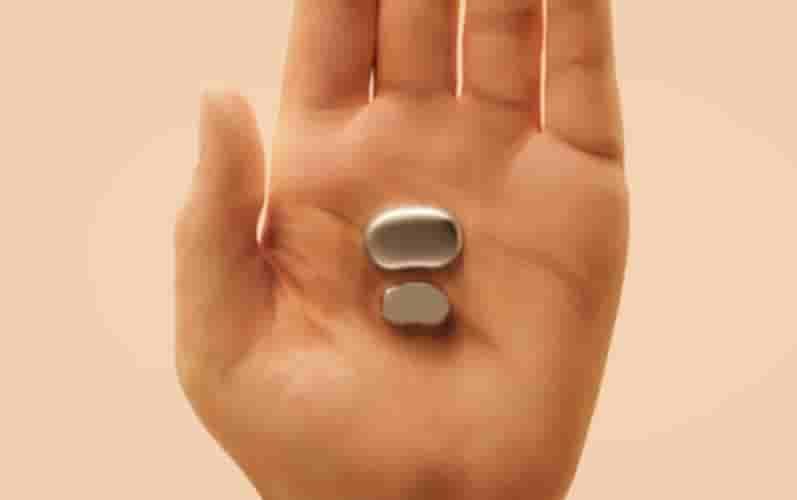
Photo: IANS
Zomato founder Deepinder Goyal has outlined potential applications for Temple, the company’s upcoming wearable device, that go well beyond conventional health tracking, including assessing whether pilots and military personnel are physically fit for demanding missions.
Responding to users on X, Goyal said Temple could eventually be used in aviation and defence to provide real-time physiological insights before personnel undertake tasks requiring high levels of concentration, alertness and physical readiness.
He was responding to a suggestion that the wearable could help restaurant managers and chefs monitor stress levels during demanding shifts.
“I would certainly have it on pilots to check if they are fit to fly. And on the air force to check who is the fittest to fly a mission today,” Goyal wrote.
The comments point to a possible future use of wearable technology in high-stakes environments, where continuous physiological monitoring could supplement existing fitness and readiness assessments. However, such applications would require rigorous validation and regulatory approval before being used for operational decisions.
Goyal also revealed that Temple’s long-term ambitions extend into brain-computer interface technology. The company is researching ways to translate human thoughts into text, potentially allowing users to communicate or trigger actions on their smartphones without conventional physical input.
“We have a research team working on thoughts to text, but that looks like a few years away. Maybe the third or fourth version of Temple,” he said.
For now, Temple is focused on physiological sensing and health-related applications. One of its key features, BrainFlow, is designed to continuously monitor changes associated with blood flow to the brain.
According to Goyal, Temple has recently completed its second validation study involving 60 participants exposed to three different physiological challenges. The company said BrainFlow showed correlations of between 0.84 and 0.91 with brain blood-volume changes measured using time-domain near-infrared spectroscopy (NIRS).
NIRS is a non-invasive optical technique used to monitor changes in blood volume and oxygenation, including changes occurring in the brain. The validation results suggest that Temple’s sensing technology may have potential for monitoring physiological changes in real time, although further independent research and clinical validation would be needed to establish its reliability for medical or operational use.
The broader vision places Temple at the intersection of wearable health technology, physiological monitoring and, eventually, brain-computer interfaces, potentially expanding the role of wearables from tracking health metrics to helping assess human performance and readiness.



© Copyright
Reporter Post.All Rights Reserved |
Powered by: Aptilogic Software |
 |
Page rendered in 0.0105 seconds.
|
Page rendered in 0.0105 seconds.