Sun, July 26, 2026
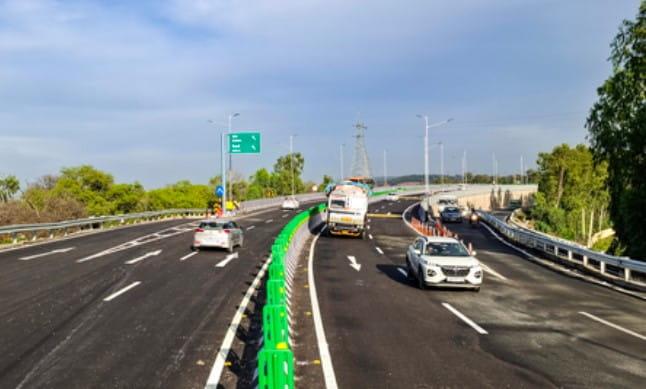
New Delhi: Road safety experts have urged authorities to adopt simple, affordable measures such as 30 kmph speed zones around schools and residential areas to reduce the growing number of road accidents and fatalities in Indian cities.
Speaking at a lecture organised by the International Road Federation (IRF), experts highlighted a range of "low-cost, high-impact" interventions that can be implemented quickly. These include high-visibility zebra crossings, raised pedestrian crossings, curb extensions (bulb-outs), median refuge islands, lane narrowing, chicanes to slow traffic naturally, and better reflective road signs and markings for improved night-time visibility.
Prof. Geetam Tiwari, Emeritus Professor and former Chair Professor of the Transportation Research and Injury Prevention Programme, said India can significantly reduce road deaths by adopting practical, evidence-based road engineering solutions. She stressed that proven international best practices can make roads safer while ensuring smoother mobility for all users.
K.K. Kapila, President Emeritus of the International Road Federation, said rapid urbanisation has placed immense pressure on city infrastructure, leading to a rise in road safety challenges.
He pointed out that, contrary to popular belief, safer roads do not always require expensive projects such as flyovers or expressways. Most urban crashes occur on regular city roads due to poor design rather than a lack of large infrastructure.
According to Kapila, low-cost engineering solutions—including roundabouts, raised pedestrian crossings, traffic-calming measures, improved street lighting, and safer intersection designs—have been shown to reduce accidents by 20 to 80 per cent while costing only a fraction of major infrastructure projects. These measures can also be implemented much more quickly, delivering immediate safety benefits.
However, Kapila noted that several hurdles continue to slow progress, including multiple agencies handling road safety, weak enforcement of traffic rules, difficulties in redesigning existing roads, fragmented funding, poor crash data and post-accident care, and resistance to creating more space for pedestrians and cyclists.
Akhilesh Srivastava, President of the ITS India Forum, stressed that intelligent transport systems should be integrated with proven engineering measures to build safer and more efficient urban roads.
With inputs from IANS




| 14-09-2018 | ||||||
| Sl No. | Parameters | Actual Data(µg/m3) | Standard Limit(µg/m3) |
|---|---|---|---|
| 1 | PM 10 | 64 | 100 |
| 2 | PM 2.5 | 33 | 60 |
| 3 | SO2 | 55.3 | 80 |
| 4 | NO2 | 58.2 | 80 |
| 14-09-2018 | ||||||
| Station | Temperature(degree centigrade) | Rainfall(mm) | Relative humidity(%) | |||
|---|---|---|---|---|---|---|
| Max | Min | Past 24 hrs. | Since 1st March, 2018 | Max | Min | |
| Ranchi | 31.0 | 22.5 | 000.0 | 1010.1 | 95 | 66 |
| Jamshedpur | 34.1 | 26.2 | 000.0 | 1252.8 | 87 | 58 |
| Bokaro | 33.5 | 24.6 | 015.2 | 824.0 | 92 | 79 |
| Daltonganj | 32.6 | 24.9 | 004.2 | 960.9 | 95 | 67 |
© Copyright
Reporter Post.All Rights Reserved |
Powered by: Aptilogic Software |
 |
Page rendered in 0.1078 seconds.
|
Page rendered in 0.1078 seconds.