Sun, September 20, 2026

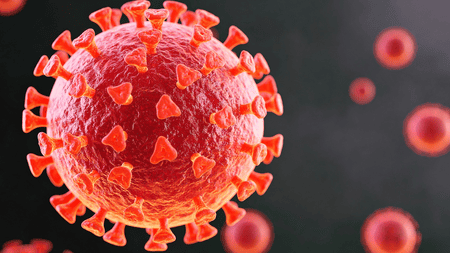
New Delhi – As a new wave of Covid-19 emerges, Israeli scientists have discovered that a protein from the SARS-CoV-2 virus may cause the immune system to mistakenly attack healthy cells.
The study, published in the journal Cell Reports and reported by Xinhua news agency, helps explain how severe Covid-19 complications arise and offers potential strategies to reduce immune-related damage caused by the virus.
Researchers at the Hebrew University of Jerusalem found that the virus’s nucleocapsid protein (NP)—normally responsible for packaging the virus’s genetic material within infected cells—can migrate to nearby healthy epithelial cells.
Once present on the surface of these uninfected cells, NP is misidentified by the immune system as a danger. The immune system then produces anti-NP antibodies, which mark these healthy cells for destruction.
This sets off the classical complement pathway, a component of the immune system that can cause inflammation and tissue damage, contributing to serious Covid-19 symptoms and potentially long Covid.
Using lab-grown cells, imaging technology, and samples from Covid-19 patients, the researchers showed that NP binds to specific molecules on cell surfaces, forming clusters that further mislead the immune response.
Importantly, the study also revealed that enoxaparin—a widely used blood thinner and heparin analog—can block NP from binding to healthy cells. In both lab and patient sample tests, enoxaparin helped prevent immune system attacks by occupying the same binding sites used by NP.
The researchers believe this finding could lead to new ways to minimize immune-related complications not only in Covid-19, but also in other viral infections.
Meanwhile, a new Covid-19 variant, named NB.1.8.1, is spreading quickly across several regions worldwide, raising fresh alarms.
This variant, a member of the Omicron lineage, was first identified in January 2025 and has since been detected in India, the US, UK, Australia, China, Maldives, and Egypt.
The World Health Organization (WHO) has classified it as a “Variant Under Monitoring,” meaning it is spreading rapidly enough to warrant attention, but not yet severe enough to be considered a major threat.
With inputs from IANS



© Copyright
Reporter Post.All Rights Reserved |
Powered by: Aptilogic Software |
 |
Page rendered in 0.0085 seconds.
|
Page rendered in 0.0085 seconds.