Sat, June 13, 2026

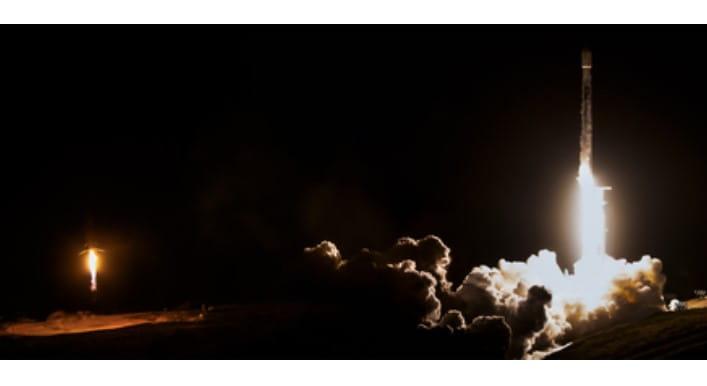
New Delhi — The successful launch of Mission Drishti has emerged as a strong validation of India’s space sector reforms, highlighting how private players are moving beyond experimental stages to deliver advanced, all-weather surveillance capabilities, according to the Indian Space Association.
Lt. Gen. AK Bhatt (Retd.), Director General of the association, described the mission as a turning point in India’s Earth observation journey, reflecting the growing maturity and capability of the country’s private space ecosystem.
He emphasised that private companies are now able to develop critical technologies with real-world applications in national security and disaster management. The launch of GalaxEye’s first satellite under Mission Drishti — also the largest ever built by an Indian private firm — marks a significant shift in how India approaches space-based observation.
The satellite, weighing around 190 kg, is being hailed as the world’s first OptoSAR platform. It uniquely integrates Electro-Optical (EO) and Synthetic Aperture Radar (SAR) sensors, allowing it to capture high-quality images in all weather conditions, both day and night.
Bhatt noted that with the commercial rollout of OptoSAR technology, GalaxEye has joined a select group of global players capable of combining optical and radar imaging into a single, seamless system for continuous monitoring.
He added that beyond the technological achievement, the mission underlines a broader shift in the space economy, where value increasingly lies in downstream applications—particularly in Earth observation, where timely and actionable data is crucial.
By overcoming the traditional limitations of optical satellites, such as cloud cover and low visibility, Mission Drishti offers a more reliable and consistent data stream. Designed as a dual-use platform, it is expected to support a wide range of sectors, including defence, agriculture, disaster response, maritime surveillance, and infrastructure planning.
Overall, the mission not only strengthens India’s position in the global space arena but also signals a new era where private innovation plays a central role in advancing national capabilities.
With inputs from IANS




| 14-09-2018 | ||||||
| Sl No. | Parameters | Actual Data(µg/m3) | Standard Limit(µg/m3) |
|---|---|---|---|
| 1 | PM 10 | 64 | 100 |
| 2 | PM 2.5 | 33 | 60 |
| 3 | SO2 | 55.3 | 80 |
| 4 | NO2 | 58.2 | 80 |
| 14-09-2018 | ||||||
| Station | Temperature(degree centigrade) | Rainfall(mm) | Relative humidity(%) | |||
|---|---|---|---|---|---|---|
| Max | Min | Past 24 hrs. | Since 1st March, 2018 | Max | Min | |
| Ranchi | 31.0 | 22.5 | 000.0 | 1010.1 | 95 | 66 |
| Jamshedpur | 34.1 | 26.2 | 000.0 | 1252.8 | 87 | 58 |
| Bokaro | 33.5 | 24.6 | 015.2 | 824.0 | 92 | 79 |
| Daltonganj | 32.6 | 24.9 | 004.2 | 960.9 | 95 | 67 |
© Copyright
Reporter Post.All Rights Reserved |
Powered by: Aptilogic Software |
 |
Page rendered in 0.0783 seconds.
|
Page rendered in 0.0783 seconds.